


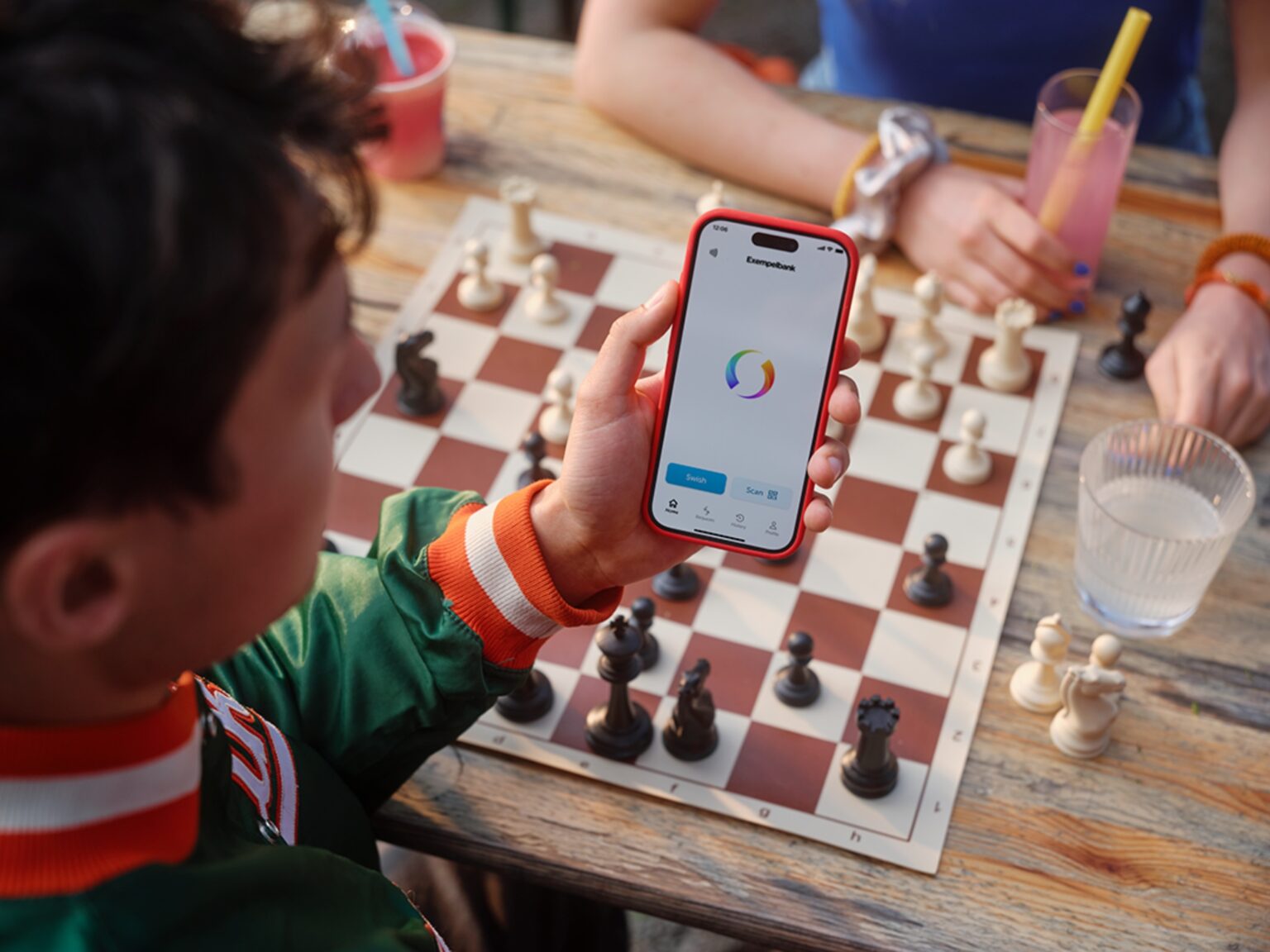

If you have spent more than a day in Sweden, you have already heard the word. Someone at a restaurant says “jag swishar dig” and sends money before the receipt has even arrived. A market stall has a handwritten sign with a four-digit number and a QR code instead of a card terminal. A friend says “can you pay and I’ll Swish you?” as if this is the most natural thing in the world.
- What Swish is and where it came from
- The prerequisite chain: why you cannot get Swish immediately
- Getting Swish: the activation process
- How Swish is used in daily life
- Transaction limits: what you need to know
- Swish for businesses: what looks different
- Swish fraud: what to know and how to protect yourself
- What to use while you are waiting for Swish
- The cultural dimension: splitting is non-negotiable
Swish is not just a payment app. It is the infrastructure of daily financial life in Sweden — as fundamental to navigating this country as knowing where Systembolaget is or understanding what fika means. For newcomers, getting Swish is one of the most practical milestones of the first few months. This guide explains what it is, what you need to get it, how it works in practice, and — crucially — what to do while you are waiting.
What Swish is and where it came from
Swish launched in 2012, built as a joint project by Sweden’s major banks: Handelsbanken, Nordea, SEB, Swedbank, Länsförsäkringar, Sparbankerna, and Danske Bank. The technical infrastructure is operated by Bankgirot, the Swedish payment clearing house. Today the service is operated through Getswish AB and connects users across all major Swedish banks.
The concept is simple: your mobile phone number is linked to your bank account. To send money, you open the app, type a phone number and an amount, authenticate with BankID, and the money moves — instantly, 24 hours a day, 365 days a year, including weekends and public holidays. There are no delays, no intermediaries, and no fees for private-to-private transfers.
As of 2026, Swish has over 8.5 million registered users in a country of roughly 10.5 million people — meaning the overwhelming majority of Swedish adults are active users. More than 1 billion transactions are processed annually. The app has become so embedded in daily life that “att swisha” has become a standard Swedish verb.
The prerequisite chain: why you cannot get Swish immediately
Here is the honest version of what Swish requires, because this is the thing most newcomers discover the hard way.
To get Swish, you need BankID. To get BankID, you need a fully featured Swedish bank account. To get a fully featured bank account, you need a personnummer. To get a personnummer, you need to be registered in the Swedish population register.
Each step depends on the previous one. There are no shortcuts in this chain. A samordningsnummer (coordination number) — the temporary identifier issued to people staying less than 12 months — does not unlock BankID, and therefore does not unlock Swish. The Freja eID alternative identity system gives access to some government portals but cannot authorize Swish payments because Swish is a banking product that requires bank-issued authentication.
The timeline from arriving in Sweden to having Swish typically runs six to twelve weeks, depending on how quickly Skatteverket processes your folkbokföring application and how efficiently you can open a full bank account once the personnummer arrives. For the full picture of this sequence, see our complete guide on how to get a Swedish personnummer and the moving to Sweden checklist.
Getting Swish: the activation process
Once you have a personnummer, a Swedish bank account, and BankID, activating Swish is straightforward. You will need two apps: the BankID säkerhetsapp and the Swish betalningar app, both available on iOS and Android.
The general process across all major banks:
Log into your internet bank. Navigate to the Swish section and connect your mobile phone number to your bank account. You can use a foreign phone number — you do not need a Swedish SIM — provided the number can reliably receive SMS messages. Set your daily transaction limit during this step. An SMS verification code is sent to confirm you control the device. Once confirmed, open the Swish app, enter your connected number, and authenticate with BankID to activate.
That is it. From that point, anyone with your phone number can send you money, and you can send money to anyone with their number. No account details needed.
One important technical note: you can only link one phone number per bank account. However, if you have accounts at multiple banks, you can link a different phone number to each one.
How Swish is used in daily life
The range of contexts where Swish appears in Swedish daily life is broader than most newcomers expect.
Splitting restaurant and café bills is probably the most frequent use. The standard Swedish approach is that one person pays the full bill and everyone else transfers their share immediately — often before leaving the table. The phrase “kan du lägga ut, sen swishar jag?” (can you cover it, I’ll Swish you?) is ubiquitous. Swish has a built-in “Split the Cost” (Dela kostnaden) feature accessible through the “Together” tab that allows one person to divide a total among up to ten people, sending each a payment request automatically. Participants cannot see each other’s identities, only the total and their own share. If someone in the group does not have Swish yet, you can add a “share without recipient” placeholder — their portion is excluded from the digital requests and settled separately.
Markets, flea markets, and small businesses frequently use Swish instead of a card terminal. Look for handwritten signs with a phone number or a printed QR code. Scanning the QR code opens the Swish app with the recipient’s number pre-filled. Some businesses have QR codes that also pre-fill the exact amount.
Second-hand purchases on Blocket and Facebook Marketplace are commonly settled via Swish for in-person handovers. (More on the safety issues around this below.)
Charities and organizations typically have short four-digit Swish numbers rather than phone numbers. Sports clubs, schools, preschools, and neighborhood associations use Swish for membership fees, activity payments, and event tickets — contexts where cash would have been the only option a decade ago.
Sending money to friends and family in Sweden is instant and free. Rent splits, shared grocery bills, energy costs — all of these flow through Swish constantly.
Online shopping: many Swedish e-commerce sites offer Swish as a checkout option alongside card payment. Payment is completed in the app with BankID authentication, with funds settling instantly.
Transaction limits: what you need to know
Swish has a national maximum of 150,000 SEK per single transaction. But individual banks set their own daily limits that are far lower by default:
| Bank | Default daily limit | Maximum standard limit | Maximum temporary limit | Notes |
|---|---|---|---|---|
| Swedbank | 3,000 SEK | 10,000 SEK | 100,000 SEK | Changes via app or internet bank, instant |
| Nordea | 3,000 SEK | 10,000 SEK | 100,000 SEK | Desktop or mobile banking, Nordea ID app |
| SEB | 3,000 SEK | 10,000 SEK | 150,000 SEK | Highest temporary ceiling; requires security token |
| Handelsbanken | 10,000 SEK | 10,000 SEK | 100,000 SEK | Mandatory 2-day delay before limit increase activates |
The Handelsbanken two-day delay is worth flagging specifically. If you are trying to pay a deposit on a rental apartment on short notice and you bank with Handelsbanken, you cannot raise your limit and pay on the same day. Plan ahead if you anticipate a large transaction.
For large transfers exceeding your temporary limit, you will need to use a standard bank transfer (bankgiro or IBAN transfer) instead.
From 2025-2026, a new regulatory requirement also applies: any Swish transfer exceeding 10,000 SEK to a new recipient (a number not previously in your transaction history) is subject to a mandatory two-hour holding period before the funds clear. This is a fraud prevention measure. For time-sensitive purchases, factor this in.
Swish for businesses: what looks different
When you see a Swish number that starts with 123, you are looking at a business Swish number (Swish Handel or Swish Företag) rather than a personal one. Business accounts have different fee structures and transaction rules. Businesses often display static QR codes that open Swish with their number pre-populated, or dynamic QR codes that also pre-fill the specific purchase amount.
As a consumer, using Swish to pay a business works identically to paying a private individual — scan or enter the number, enter the amount if it is not pre-filled, authenticate with BankID, done.
Swish fraud: what to know and how to protect yourself
Swish fraud has become increasingly sophisticated in Sweden, and newcomers — who are still learning the norms — are particularly vulnerable. Three patterns are worth understanding in detail.
Social engineering via fake bank calls. This is the most dangerous scam. A caller claims to be from your bank or the police, describes an emergency (an unauthorized loan application, a security breach), and instructs you to open BankID to “block” the threat. In reality, you are approving a BankID login on the attacker’s device, giving them access to your entire digital identity. Banks and Swish will never call you and ask you to activate BankID, approve a transaction, or share any codes. End any such call immediately and call your bank directly using the number on their official website.
The “Swish-Back” scam. You receive an unexpected Swish payment from an unknown number. Minutes later, someone contacts you claiming to have sent it by mistake and begs you to return the money immediately. If you comply, you transfer real money to a scammer. The original payment came from a stolen or compromised account — when the actual account owner reports it, the bank reverses it, taking that amount from your balance. The transfer you made “back” to the scammer is a legitimate authorized payment and cannot be reversed. If you receive an unexpected Swish payment, do not return it immediately — contact your bank first.
Fake Swish app screens on Blocket. When selling something in person, never accept visual confirmation of a payment from the buyer’s phone screen. A convincing fake Swish confirmation interface exists and has been used to steal goods in face-to-face transactions. A transaction is only complete when you can see the incoming payment in your own Swish history or your own bank app. Wait for the notification. Check your balance. Do not hand over goods until you have confirmed this yourself.
For large second-hand purchases online, use Blocketpaketet (Blocket’s integrated escrow and shipping service) or a service like Swiftcourt, which allows both parties to sign a digital contract via BankID and holds funds in escrow until the handover is verified. These add a layer of protection that a direct Swish transfer does not.
What to use while you are waiting for Swish
You can function in Sweden without Swish. It requires more friction and some social awkwardness in specific situations, but it is manageable.
Contactless card payment (Visa or Mastercard) works at virtually all retail and hospitality businesses. Most restaurants, supermarkets, and shops in Sweden accept contactless card without question. Some smaller market stalls only take Swish — if you encounter this, the simplest solution is to ask a companion to pay and settle with them later when you have Swish, or in cash if the amount is small.
Apple Pay and Google Pay work wherever contactless payments are accepted, so if your foreign debit card is registered with one of these, you are well covered for most retail situations.
Wise and Revolut are the most practical tools for the first months. Both allow you to hold SEK, convert at close to mid-market rates, and make card payments in Sweden without international transaction fees. The Wise card in particular functions seamlessly at Swedish card terminals and allows ATM withdrawals up to a monthly limit without fees. For our full guide to banking during the transition period, see our post on opening a bank account in Sweden.
Peer-to-peer transfers without Swish are the awkward part. If you are splitting a restaurant bill and everyone else is using Swish, you either need to pay your share separately by card or arrange a manual bank transfer later. Most people in this situation are understanding — it is a recognized phase of arriving in Sweden — but it helps to communicate in advance rather than discovering the problem at the table.
Cash still exists in Sweden but is increasingly difficult to use. Many shops, cafes, and restaurants no longer accept it. ATMs are present in larger towns and city centers but sparse in smaller areas. Do not rely on cash as your primary payment method.
The cultural dimension: splitting is non-negotiable
One thing that surprises many newcomers from cultures where treating friends to dinner is a social norm is how seriously Swedes take splitting bills equally. This is not stinginess — it is a deeply held cultural value around equality and individual autonomy. Paying for someone else can sometimes feel patronizing or imply a power imbalance. Even in early stages of dating, bills are typically split.
The expected granularity is also higher than in many cultures. “Approximately half” is less common than the exact amount. Swish makes this effortless — you can send 347 SEK as easily as 350 SEK.
Once you have Swish, this becomes second nature. Until then, either carry a card you know works, or make peace with briefly being the person who owes someone a transfer.
Getting Swish is not instant, but it is one of the most practically significant milestones in the process of establishing yourself in Sweden. Once it is active, a significant portion of the daily friction of life in this country simply disappears.
If you have questions about the activation process at a specific bank, or about navigating payments during the waiting period, leave a comment below. The LikeSweden newsletter is also the best way to stay updated as the Swedish banking and payment landscape continues to evolve.