




Sweden is often described as one of the countries with the best healthcare in the world, and there is a good reason for that. The system is built on the idea that everyone should have access to good medical care, no matter how much they earn. But for someone who has just arrived in Sweden, the reality can feel much less simple. What looks clear for locals can be surprisingly difficult for a newcomer to understand.
- The identity system in Sweden: What happens if you do not have a personnummer
- Samordningsnummer and Reservnummer: What is the difference?
- The EHIC: Your key healthcare document during a temporary stay
- When a temporary stay starts looking more like residence
- How to enter the Swedish Healthcare System the right way
- 1177: The first place to ask for help
- Vårdcentral: Your main option for non-emergencies
- Närakut and Akutmottagning: Urgent care or emergency room?
- What you can expect to pay for dealthcare in Sweden in 2026
- Subsidized fees for residents and EHIC holders
- The high-cost protection system: A helpful safety net
- The full-cost system for Non-EU visitors
- Dental care in Sweden: Different rules than regular healthcare
- Prescriptions and pharmacies in Sweden
- What happens in an rmergency if you do not have your EHIC card
- A few important realities about modern healthcare in Sweden
- A simple way to stay prepared
One of the biggest problems is the lack of a personnummer, the ten-digit personal identity number used in Sweden for almost everything. It is the key that opens the door to public services, including healthcare. Without it, many immigrants and short-term visitors quickly discover that they are not fully “inside the system.” This can affect where you go for treatment, how much you have to pay, and even how easy it is to get medicine from a pharmacy.
That is why it is so important to understand the rules before you actually need medical help. If you are staying in Sweden for less than a year, you may need to rely on the European Health Insurance Card, known as EHIC, or on private insurance, depending on where you come from. You also need to know that prices and routines can differ between regions. Learning these basics early can save you a lot of stress, long waiting times, and unexpectedly high medical costs later.
The identity system in Sweden: What happens if you do not have a personnummer
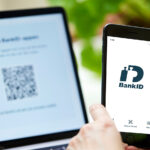
In Sweden, healthcare is closely linked to your residency status. If you move to Sweden for more than one year, you are usually expected to register with the Swedish Tax Agency, called Skatteverket, in order to receive a personnummer. This number is used by public authorities, healthcare providers, schools, and banks to identify you. It is much more than a regular identification number. In practice, it becomes part of your everyday life and gives you access to tools like BankID, which is often needed to log in to healthcare apps and the national 1177 website.
For people staying in Sweden only for a shorter period, the situation looks very different. This often includes immigrants on temporary stays, exchange students coming for one semester, or workers with short-term contracts. In most cases, getting a personnummer is not possible unless your residence permit or right of residence is valid for at least 12 months. If your stay is shorter than that, the system usually sees you as a temporary visitor, even if you are working in Sweden and paying taxes there.
This can create a difficult situation. You may be living legally in the country, but at the same time you are not fully visible in the administrative system. In other words, you are physically in Sweden, but many of the automated systems do not recognize you in the same way they recognize someone with a personnummer. This can make healthcare access feel more complicated than many people expect.
To deal with this, Sweden uses two other forms of identification: the coordination number (samordningsnummer) and the reserve number (reservnummer). These two numbers are not the same, and they are used for different reasons. Understanding how they work, and knowing the difference between them, is very important if you need medical care while living in Sweden without a personnummer.
Samordningsnummer and Reservnummer: What is the difference?
The samordningsnummer, or coordination number, is used for people who are not registered in the Swedish Population Register but still need contact with Swedish authorities. This often applies to people who own a summer house in Sweden, work in the country for a few months, or study there for a shorter period. The number looks similar to a personnummer, but there is one clear difference: the day in the birth date is changed by adding 60. Even though this number can help with things like taxes or employment, it does not automatically give you access to subsidized healthcare. To receive that kind of support, you still need to show that you are entitled to it, for example through the EHIC or another valid insurance document.
The reservnummer works in a completely different way. It is used only inside the healthcare system. If you go to a hospital or a local health centre, called a vårdcentral, and you do not have a Swedish ID number, the staff can create a reservnummer for you. Its purpose is practical: it helps the healthcare system keep all your medical information in one place. That includes your records, test results, and prescriptions. In most cases, this number is based on your date of birth plus four extra digits chosen in a way that makes it clearly different from a real personnummer.
| Identity type | Duration of residency | Issuer | Main purpose |
| Personnummer | More than 12 months | Skatteverket | Full access to all social services and digital BankID |
| Samordningsnummer | Less than 12 months | Skatteverket | Contact with agencies (tax, work, property) |
| Reservnummer | Immediate/Urgent | Healthcare provider | Internal clinical records and patient tracking |
The existence of these alternative numbers means that you should not be refused medical care just because you do not have a personnummer. In Sweden, the law guarantees access to emergency healthcare for everyone. That said, not having a personnummer still makes the whole process less convenient. You usually cannot log in to 1177.se, the main healthcare platform, to check your records or book appointments online. Instead, you often need to handle things in a more traditional way, through phone calls, paper documents, or visits in person.
The EHIC: Your key healthcare document during a temporary stay
For citizens of the EU and EEA, the European Health Insurance Card, known as the EHIC, is one of the most important documents to have when staying in Sweden temporarily. This card gives you access to public healthcare on the same terms and at the same cost as people living in Sweden. It is issued free of charge by the health insurance institution in your home country.
Many people believe that the EHIC only covers emergency situations, such as a heart attack or a serious accident. But that is not fully correct. In fact, the card covers what is called medically necessary care, and this is a much wider category. It includes treatment that cannot reasonably wait until you return to your home country. The idea is to make sure you can continue your stay in Sweden safely and do not have to leave early just because you need medical help.
What does “medically necessary care” actually mean?
The final decision is always made by the doctor who treats you, but general guidance from the EU and the Swedish National Board of Health and Welfare, Socialstyrelsen, gives a good idea of what is normally included.
This usually covers:
Acute illness and accidents
For example, sudden infections, broken bones, allergic reactions, or other health problems that need treatment without delay.
Chronic conditions
If you already live with a condition such as diabetes or asthma, care connected to that condition can also be covered during your stay. This may include regular check-ups, follow-up appointments, or medical tests needed to monitor your health.
Maternity care
Routine pregnancy check-ups and childbirth are also included, as long as you did not travel to Sweden mainly to give birth there.
Life-saving or essential ongoing treatment
This can include dialysis, oxygen therapy, or chemotherapy. In these cases, it is very important to contact the healthcare provider in Sweden in advance, so they can confirm that they have the capacity to treat you.
At the same time, the EHIC does have limits. It does not cover private healthcare if the provider is not connected to the public system. If you choose a fully private doctor or clinic, you usually have to pay the full cost yourself. The EHIC also does not cover planned care, meaning treatment you travel to Sweden specifically to receive, such as a pre-arranged surgery or another medical procedure.
When a temporary stay starts looking more like residence
For people staying in Sweden for a shorter period, there can sometimes be a legal grey zone connected to what is called habitual residence. This usually becomes relevant when your stay is temporary on paper, but in practice you are living and working in Sweden for many months. For example, if you move to Sweden for a nine-month job, you may still be an EU citizen carrying an EHIC, but over time the system may no longer see you simply as a visitor.
This matters because healthcare rights are often linked to where you are considered insured. If you are working in Sweden and paying Swedish social security contributions, you are usually insured in Sweden rather than in your home country. In that situation, the EHIC may stop being your main form of protection. Instead, it becomes important to register with the Swedish Social Insurance Agency, called Försäkringskassan, and get a certificate confirming that you are entitled to Swedish healthcare benefits.
On the other hand, not everyone in Sweden temporarily becomes part of the Swedish insurance system. If you still officially remain a resident of your home country, which is often the case for exchange students, then the EHIC usually continues to be your main document for healthcare during the whole stay. This is why your status matters so much. Two people may spend the same number of months in Sweden, but depending on their work situation and insurance status, they may fall under different healthcare rules.
How to enter the Swedish Healthcare System the right way
One important thing to know about Swedish healthcare is that it is decentralized. This means it is not managed as one single national system in practice, but by 21 separate regions. The general principles are the same across the country, but each region can have its own routines and patient fees. Because of that, knowing where to go when you get sick can save you both time and money.
1177: The first place to ask for help
In Sweden, the usual first step is not to go directly to a clinic or hospital. Instead, people are often expected to contact 1177, the national medical advice line that is open 24 hours a day. It is staffed by registered nurses who can assess your situation and guide you further. If you are calling from a Swedish phone number, you simply dial 1177. If you are using a foreign SIM card, you need to call +46 771 11 77 00 instead.
For immigrants staying in Sweden temporarily, 1177 can be especially helpful. The service can support you in several ways.
Clinical assessment
The nurse will ask about your symptoms and help decide how serious the situation is. They can tell you whether you need to see a doctor quickly, whether you should visit urgent care, or whether it is safe to stay at home and monitor the symptoms.
Language support
1177 offers help in English, and in many parts of Sweden it is also possible to get support in other languages through an interpreter.
Practical guidance
They can tell you which local clinics are open and may also help you find healthcare providers that are more used to treating patients who use the EHIC.
When you call, they will usually ask for your Swedish ID number. If you do not have a personnummer, just explain that clearly and give your date of birth instead. You can still receive help. For many people who are new to the system, 1177 is also the easiest way to understand what to do next.
Vårdcentral: Your main option for non-emergencies
The vårdcentral, or local health centre, is the basic entry point for most non-emergency medical issues in Sweden. This is where you would normally go for things like a cough that does not go away, a skin problem, mild infections, or if you need a referral to a specialist.
People who live in Sweden permanently and have a personnummer are often registered with a specific vårdcentral close to where they live. But if you are in Sweden temporarily and do not have a personnummer, you are not tied to one specific centre and can usually contact any vårdcentral.
It is worth remembering that most vårdcentraler do not work like walk-in clinics. In many cases, you need to book an appointment first. Drop-in visits are limited and are usually only available for very small or simple issues. If you go there without a personnummer, it is a good idea to show your passport and EHIC card right away at reception. This helps the staff register you correctly and makes it more likely that you will be charged the reduced public rate instead of the full private-style price.
Närakut and Akutmottagning: Urgent care or emergency room?
A very common mistake among visitors is going straight to the hospital emergency room, called akutmottagning, even when the problem is not truly life-threatening. In Sweden, the emergency room is meant for the most serious cases. Because of that, waiting times can be very long for less urgent problems, sometimes more than 12 hours.
For issues that are urgent but not immediately life-threatening, a närakut is often the better option. This is an urgent care clinic for situations that cannot wait too long, but also do not require a full emergency department. Examples include a deep cut that may need stitches, a possible broken bone, or other painful conditions that need quicker attention.
A närakut is often faster than the ER and is usually better set up for these middle-level cases. Many also have access to X-ray equipment on site. For someone without a personnummer, this can be a more practical and less stressful option, especially because these clinics are often more used to handling patients who come with an EHIC or need a reservnummer.
What you can expect to pay for dealthcare in Sweden in 2026
Healthcare in Sweden is not fully free, but it is strongly subsidized through taxes. This means patients usually only pay a smaller part of the cost themselves, called a patient fee (patientavgift), while the rest is covered by the public system. If you have a valid EHIC, you normally pay the same amount as a person living in Sweden. But if you come from outside the EU and do not have an agreement that gives you access to public healthcare, you may be charged the full cost of treatment. For many people, that can be surprisingly expensive.
Subsidized fees for residents and EHIC holders
The exact fees can differ a little depending on the region, because Swedish healthcare is managed locally. So even though the system follows the same general rules across the country, the amount you pay may not be exactly the same in every part of Sweden. In 2026, however, the standard costs for a patient with an EHIC are usually around the same level in most regions.
| Service type | Region Stockholm | Region Skåne | Västra Götaland |
| Primary Care (GP) | 275 SEK | 200 SEK | 200 SEK |
| Specialist Visit | 275 SEK | 200 SEK | 300 SEK |
| Urgent Care (Närakut) | 275 SEK | 400 SEK | 300 SEK |
| Emergency Room (ER) | 400 SEK | 400 SEK | 400 SEK |
| Hospital Stay (per day) | 130 SEK | 130 SEK | 130 SEK |
It is also worth knowing that many regions offer free healthcare for children and young people under the age of 20. On top of that, some regions are making extra changes. For example, Stockholm has decided that from 2026, emergency room visits for children under 18 will be free of charge.
The high-cost protection system: A helpful safety net
Sweden also has a protection system for people who need frequent medical care. It is called högkostnadsskydd, and it can also apply to EU immigrants who use the EHIC. For outpatient care, such as visits to a general doctor or specialist, there is a payment limit. In 2026, once you have paid a total of 1,450 SEK within a 12-month period, you can receive a frikort, or “free card.” After that, any further outpatient visits during the rest of that 12-month period are free.
For people without a personnummer, this process is usually not automatic. That is why it is very important to keep all your receipts and ask the clinic to register your visits properly in their system. If you receive care in more than one region, you may also need to show earlier receipts to prove that you have already reached the payment limit.
The full-cost system for Non-EU visitors
For visitors from outside the EU, for example from the United States, Canada, or India, the situation is very different. Because they are not covered by the same public agreements, they usually do not have access to subsidized healthcare in Sweden. Instead, they are charged the full cost of care, and that can be much higher than many people expect.
In Region Stockholm, the 2026 price list for non-EU patients gives a clear picture of the real cost of treatment:
- A simple visit to a general doctor can cost 2,093 SEK, compared with 275 SEK for someone using an EHIC.
- A visit to a specialist costs at least 2,093 SEK, and often more depending on the equipment or type of treatment involved.
- A visit to a närakut, which is urgent care, costs 2,680 SEK.
- An emergency room visit can easily cost more than 6,000 SEK just for the first assessment.
The costs become even higher if you need to stay in hospital. Inpatient care in Sweden is calculated using a system called DRG, which stands for Diagnosis Related Groups. In 2026, the base price for a single point of care at Karolinska University Hospital is 84,020 SEK. This means that a normal surgery followed by a three-day hospital stay can quickly cost more than 150,000 SEK.
Because of this, immigrants from outside the EU should never rely on chance when it comes to healthcare. Good private travel or health insurance is not just useful, but essential. Without it, even one accident or unexpected illness can lead to very serious debt.
Dental care in Sweden: Different rules than regular healthcare
Dental care in Sweden works differently from normal medical care. For adults over the age of 23, it is not covered in the same way by the regional healthcare system. Instead, it follows a separate national model with its own rules and its own high-cost protection.
For an EU immigrant using an EHIC, this difference is very important. The card usually gives you access only to emergency dental treatment at the subsidized rate. So if you suddenly get strong tooth pain or break a filling, you may be able to get help on similar terms as people in Sweden. But if you want a standard check-up, a cleaning, or other routine dental care, you generally need to pay the full commercial price yourself, and that can be quite expensive.
How the 3,000 SEK cost scale works
If you need emergency dental treatment, you can go to a dentist, public or private, as long as the clinic is connected to the national dental subsidy system. The way the cost is shared depends on how high the treatment price is.
- For costs between 0 and 3,000 SEK, you pay the full amount yourself.
- For the part between 3,001 and 15,000 SEK, you pay 50%, and the state covers the other 50%.
- For the part above 15,000 SEK, you pay only 15%, while the state pays the remaining 85%.
This sounds generous, but there is one important detail. These calculations are based on official reference prices set by the government, not always on the exact price charged by the dentist. If your dentist charges more than the reference price, you must pay that extra difference yourself. That is why it is always smart to ask for a written cost estimate before treatment begins. Most clinics can provide one.
The new dental reform in 2026
From January 2026, Sweden also introduced a new reform to make dental care more affordable for older people. This reform is called Tiotandvård, or “Ten-Year Dental Care.” Under this model, patients aged 67 and older will only pay 10% of the cost for certain types of treatment.
This change does not really help younger immigrants, but it still shows an important direction in Swedish policy. Dental care has long been one of the more expensive parts of the system, and the country is gradually trying to make it more affordable, at least for some groups.
Prescriptions and pharmacies in Sweden
In Sweden, pharmacies are called Apotek. Buying medicine is generally a structured process, and in many cases you need a prescription issued within the Swedish system.
How to get a prescription without a personnummer
Even if you already have a prescription from your home country, a pharmacy in Sweden may not always be able to accept it. This is especially common when the medicine is an antibiotic, a controlled substance, or another type of treatment with stricter rules. Because of that, the safest option is usually to visit a Swedish vårdcentral, show your EHIC, and ask a Swedish doctor to issue a local prescription instead.
Once the doctor does that, the prescription is entered into a national database. If you do not have a personnummer, the prescription is usually connected to your name and date of birth, or sometimes to a reservnummer. When you later go to the pharmacy, you will normally need to show your passport and your EHIC card again. This is important. If the pharmacist cannot see that you are entitled to the subsidized rate, you may be charged the full market price for the medicine.
How much medicine costs
Just like doctor visits, prescription medicine in Sweden is also covered by a high-cost protection system. In 2026, the maximum amount that a resident or EHIC holder needs to pay for prescription drugs during a 12-month period is 2,600 SEK. After you reach that limit, any additional eligible prescription medicine during the rest of that period becomes free.
| Cumulative spending | Patient responsibility | State subsidy |
| 0 – 1,300 SEK | 100% | 0% |
| 1,301 – 2,400 SEK | 50% | 50% |
| 2,401 – 4,500 SEK | 25% | 75% |
| Above 5,800 SEK | 0% (Ceiling reached) | 100% |
What happens in an rmergency if you do not have your EHIC card
If you suddenly need medical help and do not have your EHIC card with you, for example because it was lost, stolen, or simply left at home, there is no need to panic. The Swedish healthcare system has a backup solution for situations like this.
The provisional replacement certificate
This backup document is called a Provisional Replacement Certificate, often shortened to PRC. It gives you the same rights as the EHIC and can usually be issued quite quickly by the health insurance authority in your home country. If you are admitted to a hospital in Sweden, the staff may even be able to contact your home country on your behalf to help arrange it.
How to get a PRC
First, contact the national health insurance institution that originally issued your EHIC.
Then ask them to send a Provisional Replacement Certificate directly to the Swedish hospital or clinic where you are receiving treatment.
Once the clinic receives that document, your case can normally be changed from full-cost patient status to subsidized patient status. This means you should only need to pay the normal patient fee instead of the full medical cost.
This can make a very big difference, especially in situations where treatment would otherwise become very expensive.
If you are a Swedish citizen living abroad and you become ill in another country, the process can work in the other direction too. In that case, you can contact the Swedish Social Insurance Agency, Försäkringskassan, at +46 771 524 524 to request a PRC for your care outside Sweden.
A few important realities about modern healthcare in Sweden
Beyond the formal rules, there are also some wider patterns in Swedish healthcare that can strongly affect the experience of immigrants staying in the country for a shorter time.
The challenge of digital exclusion
Sweden is a very digital country, and in many parts of daily life people are expected to handle things through their phones. Healthcare is no exception. Many residents use apps such as Kry, Min Doktor, or Alltid Öppet to speak to a doctor by video, chat with a nurse, renew prescriptions, or get help without visiting a clinic in person. These services are popular because they are convenient and often much faster than waiting for a physical appointment.
But for someone without a personnummer, there is often a major barrier. Most of these apps require BankID to log in, and BankID is usually not available if you do not have a full Swedish identity setup. As a result, many short-term immigrants are effectively shut out of some of the easiest and fastest healthcare tools in the country.
This does not mean you cannot get medical care. You still can. But it often means you have to do everything in a more traditional way, by calling clinics, waiting on hold, explaining your situation repeatedly, and arranging things manually instead of through an app. That can feel frustrating, especially when the people around you seem able to solve similar issues in just a few minutes on their phones. Knowing this in advance can help set realistic expectations. The quality of care may still be good, but the path to getting it is often less smooth.
Regional differences can change your experience
Another important thing to remember is that Sweden does not function as one completely identical healthcare system from north to south. Since each region has some control over local fees, routines, and service structure, your experience can partly depend on where in Sweden you are staying.
For example, Region Stockholm has many närakut clinics, which makes it easier to get urgent care without going directly to a hospital emergency room. In smaller towns or more rural parts of the country, the options outside normal working hours may be much more limited. In some places, the only realistic evening or weekend option may be the ER at a hospital that is far away.
Because of this, regional variation is not just an administrative detail. It can have a real effect on how easy, fast, and affordable it is to get help. If you are planning a temporary move to Sweden, it is worth checking the local Patient Fee Handbook (Patientavgiftshandboken) for the specific region where you will live. That can give you a clearer picture of the local rules and help you avoid surprises later.
A simple way to stay prepared
If you are coming to Sweden for a shorter stay, a little preparation can make a very big difference. The most important thing is to keep your physical EHIC card with you, not just a photo of it or a copy left at home. In an emergency, having the card ready can save a lot of time, reduce paperwork, and help you avoid being charged full medical costs by mistake.
It is also a very good idea to save the number for 1177 in your phone right away: +46 771 11 77 00. This should be your first point of contact whenever you have a health concern and are not sure what to do. It is one of the easiest ways to get clear advice and find the right level of care without wasting time or money.
And even if you are covered by the EHIC, private travel insurance is still worth having. The EHIC is very useful, but it does not cover everything. For example, it will not pay for medical transport back to your home country, and it may not help in situations like mountain rescue or other special emergencies. For people coming from outside the EU, good insurance is even more important, because without it, healthcare in Sweden can become extremely expensive.
In the end, the Swedish healthcare system is built on high standards and a strong idea of equal care. The administration can feel complicated when you do not have a personnummer, but the quality of treatment itself is very good. Once you understand the basic rules, the role of the EHIC, and the way regional fees work, it becomes much easier to move through the system with confidence and enjoy your time in Sweden with one less thing to worry about.