

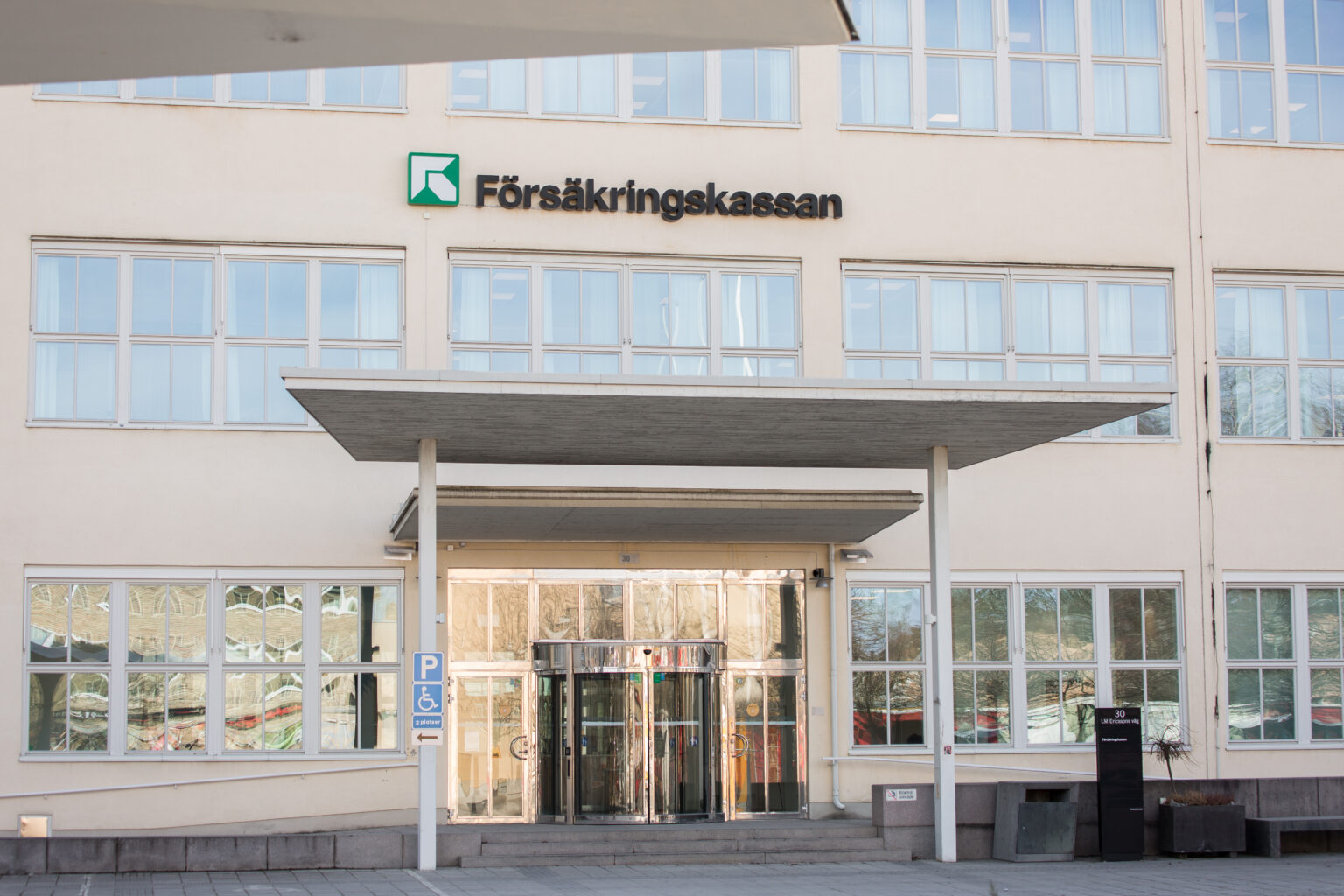

If you have recently moved to Sweden, or are planning to, Försäkringskassan is one of the most important institutions you will deal with. It is the Swedish Social Insurance Agency — the body that manages sick pay, parental leave, child allowances, housing support, and dental subsidies, among much else. Most of the financial safety net that Sweden is known for runs through this agency, and yet a surprising number of newcomers only discover it exists when they actually need something from it.
- What Försäkringskassan actually is
- Two types of coverage: residence-based and work-based
- SGI: the number that determines most of your benefits
- How to register — and why it doesn’t happen automatically
- Mina sidor: Försäkringskassan’s digital portal
- In-person support: Statens servicekontor
- The main benefits: what each one covers
- Parental benefit (föräldrapenning)
- VAB — caring for a sick child (tillfällig föräldrapenning)
- Sick pay (sjukpenning)
- Child allowance (barnbidrag)
- Housing allowance (bostadsbidrag)
- Housing supplement for recipients of disability or sickness compensation (bostadstillägg)
- Disability and activity compensation (sjukersättning and aktivitetsersättning)
- Benefit for caring for a seriously ill close relative (närstående)
- Dental care subsidy (tandvårdsstöd)
- Common mistakes newcomers make
This post is a hub overview — it explains what Försäkringskassan is, how the system works, how to register, and what the main benefits cover. Each benefit has its own dedicated post on LikeSweden where you can find the full details; I link to each one below.
What Försäkringskassan actually is
Försäkringskassan (sometimes shortened to “FK”) is a Swedish government agency, not an insurance company and not a charity. It administers Sweden’s social insurance system — a set of statutory benefits that exist to replace lost income when you are ill, pregnant, caring for a new child, looking after a sick child, or facing other life events that affect your ability to work. It is funded through taxes and employer contributions (arbetsgivaravgifter), not through individual insurance premiums.
It is worth being clear about what Försäkringskassan is not. It does not run the public pension system — that is the Swedish Pensions Agency (Pensionsmyndigheten). It does not run the healthcare system — that is the responsibility of Sweden’s 21 regions. It does not handle unemployment benefits — those are administered by the A-kassa funds. And it does not register you in the population system — that is Skatteverket’s job, and you need to do that first. For how unemployment insurance works, I have a dedicated post on unemployment in Sweden.
Two types of coverage: residence-based and work-based
The single most useful thing to understand about the Swedish social insurance system is that benefits divide into two fundamentally different tracks, and which track applies determines what you actually receive.
Residence-based benefits (bosättningsbaserade förmåner) require only that you live in Sweden and are registered in the Swedish population register (folkbokförd). They include child allowance, housing allowance, and the state dental care subsidy. These benefits are independent of whether you work or have any employment history in Sweden.
Work-based benefits (arbetsbaserade förmåner) require that you are actually working in Sweden and have established an SGI — a sickness benefit qualifying income (sjukpenninggrundande inkomst). They include sick pay, income-based parental benefit, and the temporary parental benefit for caring for a sick child (VAB). These benefits compensate you for lost income, so without prior income in Sweden, they pay at a flat minimum rate rather than at a percentage of your salary.
| Residence-based (folkbokföring required) | Work-based (employment + SGI required) |
|---|---|
| Child allowance (barnbidrag) | Sick pay (sjukpenning) |
| Housing allowance (bostadsbidrag) | Income-based parental benefit (föräldrapenning) |
| State dental subsidy (tandvårdsstöd) | VAB (vård av barn) |
| Minimum-level parental benefit | Pregnancy benefit (graviditetspenning) |
| Disability/activity compensation (guarantee level) | Full disability and activity compensation |
This distinction matters enormously for newcomers. You can arrive in Sweden, register in the population system, and immediately qualify for residence-based benefits — but work-based benefits require building up an employment history in Sweden first.
SGI: the number that determines most of your benefits
Your SGI — sjukpenninggrundande inkomst — is your expected annual income from work in Sweden, as registered by Försäkringskassan. It is the figure used to calculate almost every income-based benefit. If your SGI is zero, your sick pay is zero and your income-based parental benefit falls to the flat 250 SEK per day minimum. If your SGI reflects a full professional salary, those benefits replace a meaningful share of what you would otherwise earn.
To establish an SGI, you need to be employed in Sweden with income expected to last at least six consecutive months, and earn at least 24% of the annual price base amount (prisbasbelopp). For 2026, the price base amount is 59,200 SEK, making the minimum SGI threshold 14,208 SEK/year. The SGI is capped at 592,000 SEK/year (10 times the price base amount), producing a maximum daily sick pay of 1,259 SEK and maximum daily parental benefit of 1,250 SEK.
SGI can be protected — meaning it doesn’t drop to zero — while you are registered as a job-seeker with Arbetsförmedlingen, studying in a CSN-eligible program, or during the first two years of a child’s life. Understanding how to protect your SGI through transitions is one of the most financially consequential things to get right. I cover the full mechanics in my post on Swedish parental leave and in the sick leave guide.
How to register — and why it doesn’t happen automatically
Here is the step most newcomers miss: registration with Försäkringskassan does not happen automatically when you receive your personnummer. Skatteverket registers you in the population system; Försäkringskassan needs to be notified separately.
The process depends on your situation.
If you move to Sweden with children under 16: you don’t need to take any action. Once your population registration with Skatteverket is complete, Försäkringskassan will contact your family directly to verify eligibility for child allowance and assess your insurance coverage.
If you move to Sweden without children: you are enrolled in the system when you first apply for a benefit or request a European Health Insurance Card (EHIC). This can be done digitally through Mina sidor using BankID or Freja eID+, or by post using Form 5456 (Information when moving to or working in Sweden).
Form 5456: what documents you need
If submitting Form 5456 by post — for example because you don’t yet have BankID — the supporting documents depend on your employment status:
All applicants without a personnummer: a copy of a valid national passport.
If employed: an employment contract or employer certificate stating your start date, working hours, and workplace location in Sweden.
If self-employed: your company registration certificate, F-tax registration from Skatteverket, and proof the business is active.
If unemployed: a certificate from your home country’s unemployment authority confirming receipt of unemployment benefits there.
If a posted worker from the EU/EEA: an A1 Certificate from the social security authority in your home country, confirming you remain covered under their system.
The completed form goes by post to: Försäkringskassans inläsningscentral, 831 87 Östersund.
Every adult family member must register individually. Accompanying adults are not covered under a primary applicant’s registration. Children under 18 must be declared by their legal guardians.
Before you have a personnummer
Until you have a personnummer and BankID, access to Försäkringskassan’s digital systems is limited. Freja eID+ offers partial access using a coordination number, but full portal functionality requires BankID. For healthcare coverage in the interim, EU/EEA citizens should rely on their EHIC from their home country — I cover this fully in my post on healthcare in Sweden without a personnummer. For the full sequence of steps from arriving to having BankID, see my moving to Sweden checklist.
Mina sidor: Försäkringskassan’s digital portal
Once you have BankID, Mina sidor at forsakringskassan.se is your main interface for almost everything. From there you can apply for and manage benefits, report changes in income or living situation, check payment dates, download decisions and correspondence, and request an EHIC. The portal is in Swedish, though Försäkringskassan provides guidance in English and can offer telephone support in Arabic, Somali, Tigrinya, and Ukrainian as well as English.
For general enquiries, the phone number is 0771-524 524. Processing times for standard applications — sick pay, VAB, parental benefit — are typically around 30 days when documentation is complete. Complex cases involving international income or coordination with other countries can take up to four months. If no decision has been issued within six months of your application, you have a statutory right to file a delay appeal (dröjsmålstalan), after which Försäkringskassan must respond within four weeks.
In-person support: Statens servicekontor
For matters that require a face-to-face visit — identity verification, help with forms, questions about your case — you can visit a Statens servicekontor, where staff from Försäkringskassan, Skatteverket, Arbetsförmedlingen, and Pensionsmyndigheten are all co-located. You can find your nearest office at statenssc.se.
The main benefits: what each one covers
Below is a brief overview of each major benefit Försäkringskassan administers. Each one has its own dedicated post on this blog where I go into the full rules, amounts, and how to apply.
Parental benefit (föräldrapenning)
Sweden’s 480-day paid parental leave per child is split between parents, with 390 days at the income-based rate (up to 1,250 SEK/day) and 90 at the minimum flat rate of 180 SEK/day. Each parent has 90 non-transferable days. Newcomers moving with children already born abroad face pro-rata reductions: arriving in the child’s second year cuts the pool to 200 days; arriving after the second birthday cuts it to 100 days. Full details in my post on Swedish parental leave.
VAB — caring for a sick child (tillfällig föräldrapenning)
When your child aged 8 months to 12 years is ill, you can receive approximately 80% of your SGI for each day you stay home, up to 120 days per child per year. The SGI ceiling for VAB is 444,000 SEK for 2026. Days can also be transferred to another insured person — a grandparent, for example — who then cares for the child. More on this and the general sick leave framework in my sick leave in Sweden guide.
Sick pay (sjukpenning)
If you are ill and unable to work, Försäkringskassan pays sick benefit from day eight of illness — days 1 through 14 are covered by your employer as sjuklön. The benefit replaces approximately 80% of your SGI, up to the daily maximum of 1,259 SEK. A doctor’s certificate is required from day eight. Everything about the qualifying period, the karensdagen, and employer sick pay is in my sick leave post.
Child allowance (barnbidrag)
A tax-free 1,250 SEK per month per child under 16, paid automatically to registered parents. If you moved to Sweden with children under 16, no application is needed — Försäkringskassan contacts you. With more than one child, a flerbarnstillägg (large family supplement) is added automatically:
| Children | Monthly total |
|---|---|
| 1 | 1,250 SEK |
| 2 | 2,650 SEK |
| 3 | 4,480 SEK |
| 4 | 6,740 SEK |
| 5 | 9,240 SEK |
With joint custody, the allowance splits equally between parents (625 SEK each). One important rule: if a child lives outside Sweden for more than six months, the allowance stops. Failing to report this to Försäkringskassan is classified as benefit fraud (bidragsbrott).
Housing allowance (bostadsbidrag)
A needs-tested, tax-free grant for low-income families with children and for young adults under 29. For families with children, the maximum monthly payout ranges from 6,800 SEK for one child to 8,600 SEK for three or more, depending on rent, household income, and dwelling size. For young adults under 29, the income ceiling is 86,720 SEK annually (single) or 103,720 SEK combined (couple), with a maximum monthly allowance of 1,300 SEK.
Crucially, this benefit is paid as a preliminary estimate based on your declared annual income, then reconciled against your actual tax assessment the following year. If your income turned out to be higher than estimated, you must repay the difference. The temporary inflation-related 25% top-up that existed in previous years ended permanently in June 2025 — the current amounts reflect the standard baseline.
Housing supplement for recipients of disability or sickness compensation (bostadstillägg)
A separate housing benefit for people receiving sickness or activity compensation, and for pensioners from age 67 (administered by Pensionsmyndigheten at that stage). For pensioners, it can cover up to 96% of eligible housing costs, up to 7,290 SEK/month. This benefit is highly sensitive to personal savings: assets above 100,000 SEK (single) or 210,000 SEK (couple) trigger a reduction, with 15% of excess assets counted as fictitious annual income.
Disability and activity compensation (sjukersättning and aktivitetsersättning)
For people with a permanent or long-term reduced work capacity. Sjukersättning is for people aged 19–64 with a permanent inability to work; aktivitetsersättning is for people aged 19–29 with a temporarily reduced capacity, and always includes an accompanying right to support in trying to return to the labor market.
Benefit for caring for a seriously ill close relative (närstående)
If you take unpaid leave from work to care for a terminally ill family member, Försäkringskassan can pay a benefit replacing approximately 80% of your SGI for up to 100 days. The person being cared for must be at the end of life and consent to the arrangement.
Dental care subsidy (tandvårdsstöd)
Sweden’s adult dental system is market-priced — clinics set their own rates — but Försäkringskassan provides two layers of support to reduce costs.
The general dental allowance (allmänt tandvårdsbidrag, ATB) is an annual credit automatically applied to your account at affiliated dental clinics on July 1st each year. As of 2025, free dental care now runs until the end of the year you turn 19 (lowered from 23). From age 20, you pay for dental care and receive the ATB:
| Age | Annual ATB | Maximum accumulated |
|---|---|---|
| 20–23 | 600 SEK | 1,200 SEK over 2 years |
| 24–66 | 300 SEK | 600 SEK over 2 years |
| 67+ | 600 SEK | 1,200 SEK over 2 years |
You don’t need to apply — just tell your clinic to deduct it from the bill. The credit can roll over for up to two years if unused.
High-cost dental protection (högkostnadsskydd) kicks in for larger treatment costs, calculated against state reference prices (referenspris) rather than the clinic’s actual prices:
Costs up to 3,000 SEK: patient pays 100%. Costs between 3,001 and 15,000 SEK: state covers 50%. Costs above 15,000 SEK: state covers 85%.
From January 1, 2026, a new reform called Tiotandvård limits co-payments to just 10% for residents aged 67 and over for essential restorative treatments — fillings, root canals, crowns — on the front ten teeth in both jaws.
Common mistakes newcomers make
Not registering proactively. If you arrive without children, nothing happens automatically. You need to initiate contact when you apply for your first benefit or EHIC.
Assuming benefits are available immediately at full rate. Work-based benefits depend on your SGI, which requires building up an employment history. Your first months in Sweden may mean you receive only minimum-rate benefits — this is expected and normal, but it’s important to plan for it financially.
Not protecting SGI when leaving work. If you stop working and don’t register with Arbetsförmedlingen on the very first day, your SGI can drop to zero permanently, affecting every future benefit calculation.
Not reporting a child’s extended time abroad. If your child is outside Sweden for more than six months, child allowance stops. Missing this reporting obligation is classified as fraud, not an honest mistake.
Not applying for barnbidrag for a child born abroad. If you move to Sweden with a child who was born in another country, the allowance is not automatic — you need to register the child with Försäkringskassan, unlike for children born in Sweden.
Försäkringskassan is complicated not because it’s poorly designed, but because it has to handle an enormous range of life situations and the rules that matter for a newly arrived person are often different from those that apply to a Swede who has been in the system for decades. If you have a specific question about your situation, leave a comment below and I’ll do my best to help or point you in the right direction.