




If you have ever been invited to a Swedish Midsommar celebration and wondered what on earth you are supposed to eat — or if you have lived in Sweden for a while and still cannot quite explain why Swedes treat a plate of potatoes and pickled fish as a near-religious experience — this guide is for you.
- How the Midsommar meal works
- Pickled herring: the centrepiece everyone has an opinion about
- Why herring became a Swedish staple
- The main varieties you will find at a Midsommar table
- Silltårta: the modern variation
- Where to buy herring in Sweden
- New potatoes: why a potato can be a cultural event
- The accompaniments: what goes alongside
- Gravlax: Sweden’s cured salmon
- Strawberries and the dessert course
- Snaps, aquavit, and the drinking culture
- Regional variations: how the menu changes across Sweden
- Shopping logistics: when and where to buy Midsommar food
- Why this particular menu is almost sacred
Cook it the Swedish way
this summer
31 authentic recipes for the perfect Midsommar table — gravlax, silltårta, new potatoes, snaps & strawberry cake.
The Midsommar meal is one of the most culturally loaded events in the Swedish calendar. It is not just food. It is a seasonal ritual, a collective expression of identity, and a very specific culinary script that has been handed down through generations with surprisingly little variation. Swap the herring for a Caesar salad and you will not be thanked for your creativity. Understanding what is on the table, where it comes from, and why it matters will help you enjoy the celebration far more — whether you are a first-time guest or someone who has been eating Swedish summers for years.
How the Midsommar meal works
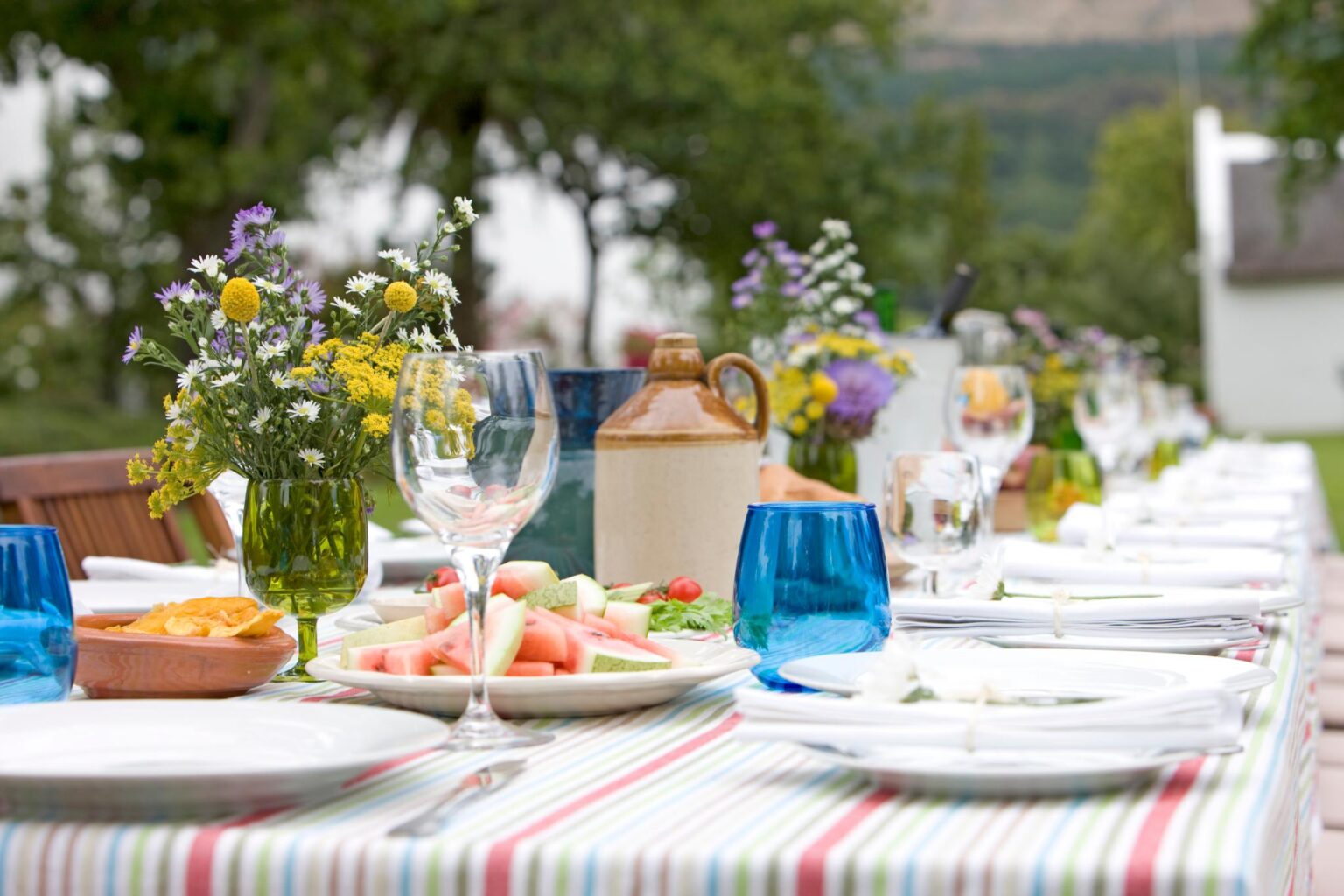
The central Midsommar meal is a lunch, not a dinner. This is one of the first things that surprises people from countries where the main celebration meal happens in the evening. In Sweden, the table is set outdoors — or in a garden, on a patio, or at the edge of a meadow — and the eating begins around noon and can easily stretch to three or four in the afternoon.
The format is a smörgåsbord: a spread of cold dishes set out together on the table, from which everyone helps themselves in multiple rounds rather than being served a single plated meal. Swedes are serious about the order in which the smörgåsbord is approached — you start with the herring and work your way forward, ending with the sweet dessert course. Mixing the courses or going straight for the salmon is technically acceptable but slightly frowned upon by traditionalists.
The meal is deliberately unhurried. It is timed to end just before the late-afternoon raising of the maypole and the ring dances, which means that by the time the strawberries arrive, the party is about to move outside. The evening that follows is more informal — grilled food, leftovers, perhaps a silltårta for those who want something savory again — but the formal lunch is the heart of the celebration.
Pickled herring: the centrepiece everyone has an opinion about
Nothing divides Swedes and their foreign guests more reliably than sill — pickled herring. Swedes love it. Many newcomers are deeply uncertain. If you are in the second group, the Midsommar table is a good place to start trying, because the variety on offer means there is almost certainly something that will surprise you.
Why herring became a Swedish staple
Herring was not always a delicacy. For centuries, it was a survival food — inexpensive, abundant in the Baltic and North Seas, and easy to preserve through pickling and salting. The herring fisheries of the west coast of Sweden were historically among the most productive in Europe, and salted herring from the Bohuslän coast fed not just Sweden but large parts of northern Europe during the medieval period. The technique of pickling herring in a sweetened vinegar brine — inläggning — developed as a way to produce a more palatable, less intensely salty version of the preserved fish, and gradually evolved into the refined product that Swedes now consider essential at every major festive occasion.
The main varieties you will find at a Midsommar table
Inlagd sill is the foundation — plain pickled herring in a clear brine of vinegar, sugar, and bay leaves. It is mild, slightly sweet, and slightly acidic. This is the classic, the baseline against which all other varieties are measured.
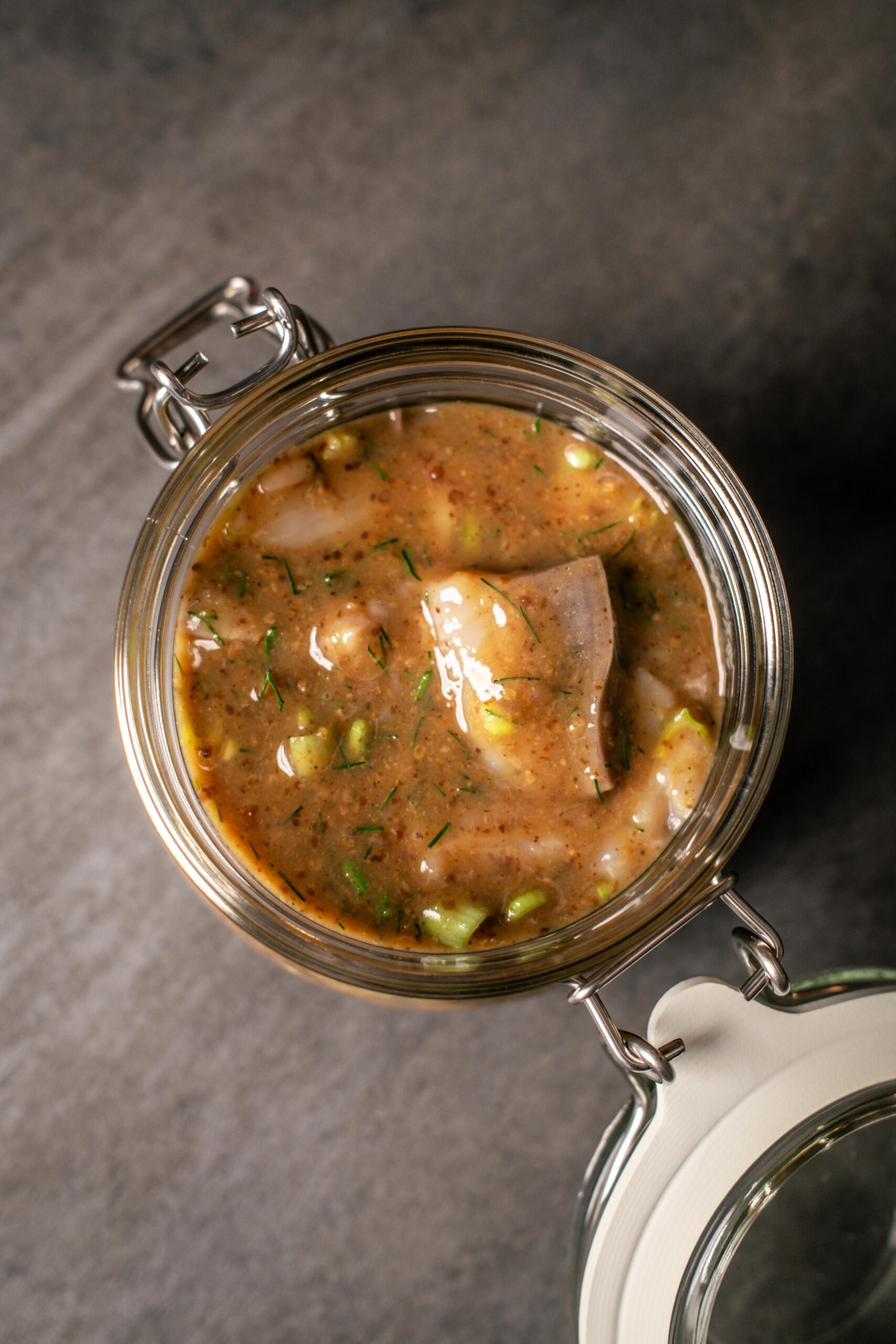
Senapssill — mustard herring — is arguably the most popular variety at Midsommar. The herring fillets are coated in a creamy mustard sauce mixed with dill, sugar, and sometimes a touch of vinegar. The result is rich, rounded, and considerably more forgiving for people who are cautious about fish. If you are trying sill for the first time, start here.
Löksill — onion herring — pairs the fish with thinly sliced raw onion in a sharper vinegar marinade. The combination is pungent and more assertive than the mustard version, and it is particularly good with a cold beer.
Kryddad sill — spiced herring — typically includes allspice, cloves, and sometimes carrot in the marinade. It has a warmer, more complex flavour profile and is one of the older traditional styles.
Matjessill — matjes herring — is the most historically interesting variety. The name comes from the Dutch word maatjes, meaning “virgin,” and refers to young herring caught before their first spawning, when their fat content is at its highest. Matjes herring is typically cured in a brine that historically included sandalwood, cinnamon, and cloves, giving it a distinctive reddish-brown colour and a particularly soft, silky texture that is different from all the other varieties. The town of Klädesholmen on the west coast of Sweden has applied for Protected Geographical Indication status for its matjes herring, which gives a sense of how seriously the regional tradition is taken.
Each variety is served cold, directly from the jar or a serving dish, alongside the warm potatoes. The contrast between the cold, sharp herring and the warm, buttery potatoes is the whole point of the combination.
Silltårta: the modern variation
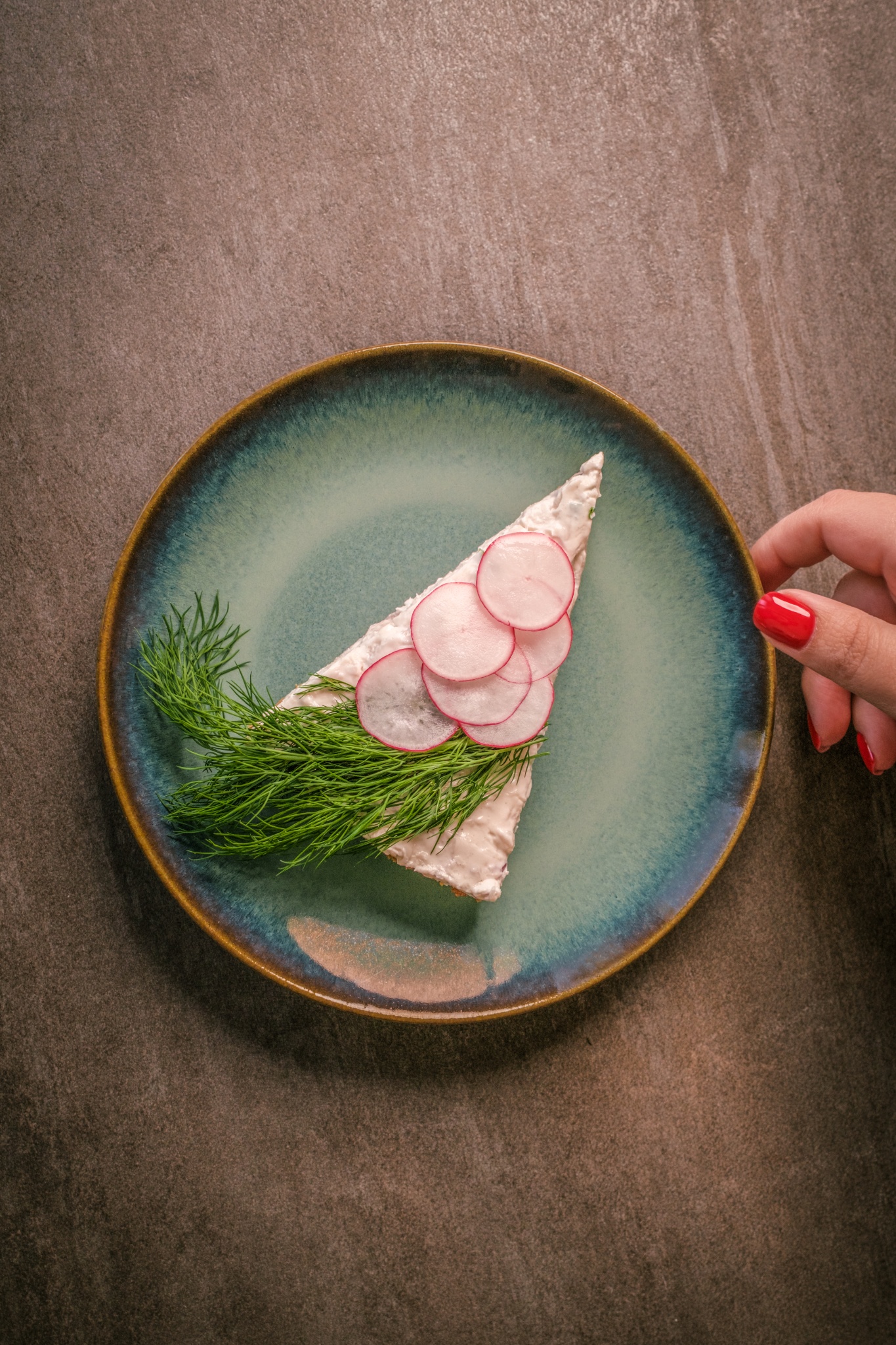
A more recent addition to the Midsommar repertoire is silltårta — literally “herring cake,” though it is not sweet. It evolved in the mid-20th century as home refrigeration became common, transforming the traditional ingredients of pickled herring and rye crispbread into a layered, moulded party centrepiece. A silltårta is built up in layers of crispbread or dark bread, separated by fillings of herring, cream cheese, soured cream, chives, and sometimes hard-boiled eggs, then coated and decorated like a celebration cake. It is served cold, sliced at the table, and has become a popular choice for those who want to present the traditional flavours in a more visually striking format.
Where to buy herring in Sweden
Every major supermarket — ICA, Willys, Coop, Hemköp — stocks a wide range of pickled herring in the weeks before Midsommar. The refrigerated shelves expand significantly in late May and early June to accommodate the seasonal demand. For a wider selection and higher quality, fish markets and specialty food halls are the better option. In Stockholm, Östermalms Saluhall carries an extensive selection from artisan producers, including varieties made by small west coast smokehouses that are not available in supermarkets.
Look for jars labelled “Inlagd sill från Sverige” or produced by Swedish fish companies such as Abba, Klädesholmen, or Göteborgs Fiskhamn. The Abba brand — which has nothing to do with the band — is one of Sweden’s oldest and most recognized herring producers, founded in Gothenburg in 1838 and still producing traditional varieties.
New potatoes: why a potato can be a cultural event
Färskpotatis — new potatoes — are the emotional counterpart to the herring. Where herring provides the tang and the history, new potatoes provide the warmth, the softness, and the seasonal promise of summer.
New potatoes are harvested before they reach full maturity, which means their skins are still paper-thin and can be rubbed off easily or left on entirely. They have a higher water content than mature potatoes, a waxy rather than floury texture, and a natural sweetness that comes from the higher sugar content present before the sugars convert to starch during full maturation. Swedish-grown new potatoes, cultivated during the long, cool summer days with their unusually high light exposure, develop a particularly concentrated flavour that is noticeably different from imported varieties.
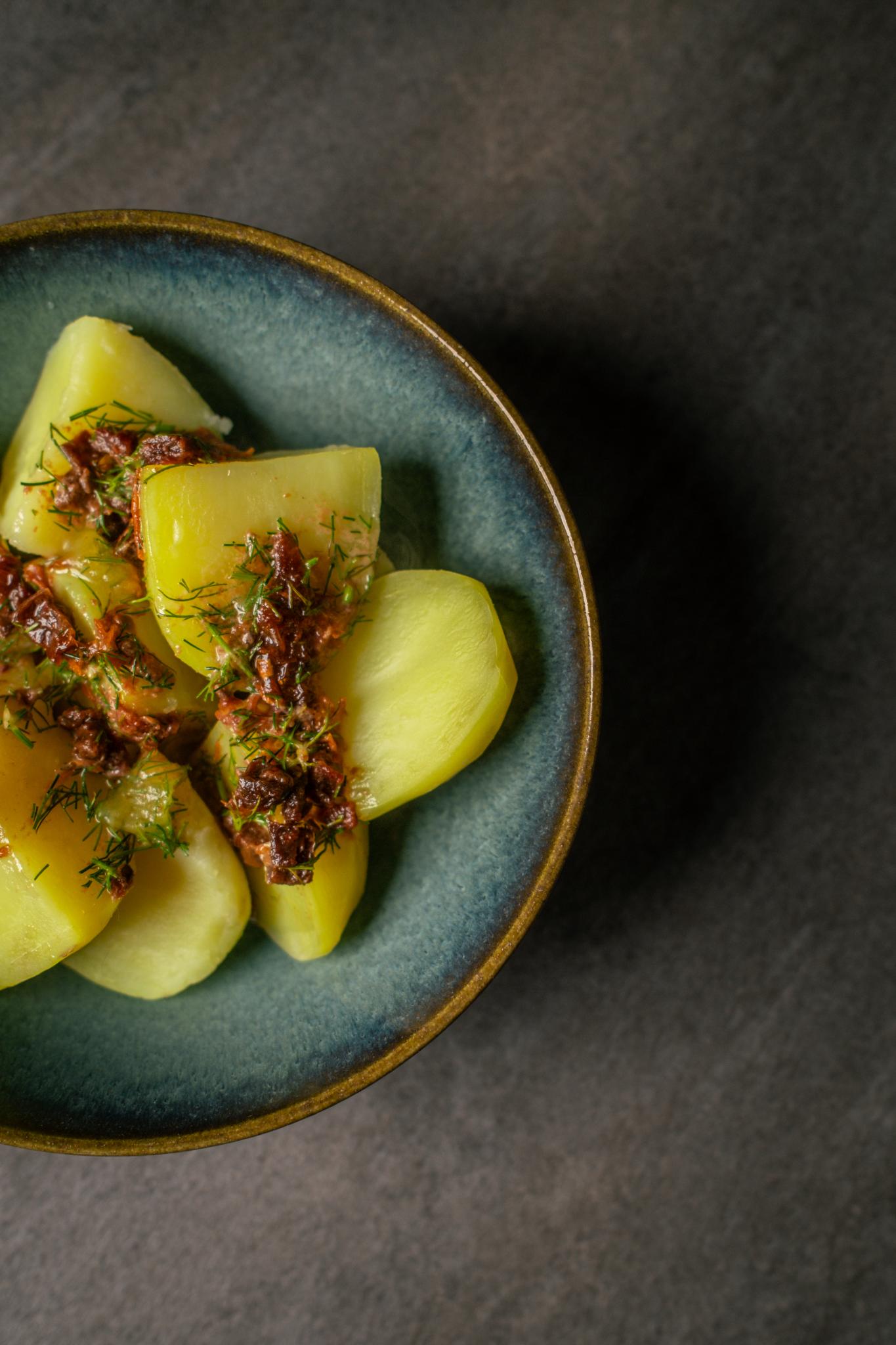
The first Swedish new potatoes of the season — typically appearing in supermarkets in late May or early June — generate genuine excitement. Swedes will note when they have appeared, discuss which region’s crop has arrived first, and sometimes queue for specific varieties. The most prized are almond potatoes (mandelpotatis), a smaller, elongated variety with an intense, nutty sweetness. The arrival of Swedish new potatoes is understood as one of the first tangible signs that summer has really begun.
For Midsommar, the potatoes are boiled with a generous quantity of fresh dill in the water — the dill infuses the cooking liquid and perfumes the skins. They are served warm or at room temperature, never cold, and always with the skins on. The combination of warm dill-scented potato and cold pickled herring, with a spoonful of soured cream, is the flavour of Swedish Midsommar.
Look for potatoes labelled “Svensk färskpotatis” — the word Svensk guarantees Swedish origin. The label “Från Sverige” (From Sweden) is a nationally recognised certification seal that appears on a wide range of Swedish agricultural products and is the quickest way to confirm local origin when shopping.
The accompaniments: what goes alongside
The herring and potatoes are the main event, but the supporting cast of accompaniments is what makes the smörgåsbord feel like a complete meal rather than a snack.
Gräddfil — Swedish soured cream, similar to crème fraîche but slightly thinner and with a milder flavour — is spooned generously over the potatoes. It provides fat and acidity that balances both the richness of the herring marinades and the starchy sweetness of the potatoes.
Gräslök — fresh chives — are chopped finely and scattered over everything. In June, gräslök grows abundantly across Sweden, and at Midsommar it appears on almost every plate at some point during the meal. The mild allium flavour brightens the whole table.
Hard-boiled eggs (hårdkokta ägg) are a standard accompaniment — sliced or halved, sometimes with a light dusting of dill or served alongside various condiments. They provide protein and a gentle richness that works well between bites of herring and potato.
Smör — Swedish butter — is served with dark bread or crispbread. Swedish butter is unsalted or lightly salted and notably high in fat content compared to many European equivalents, giving it a rich, clean flavour.
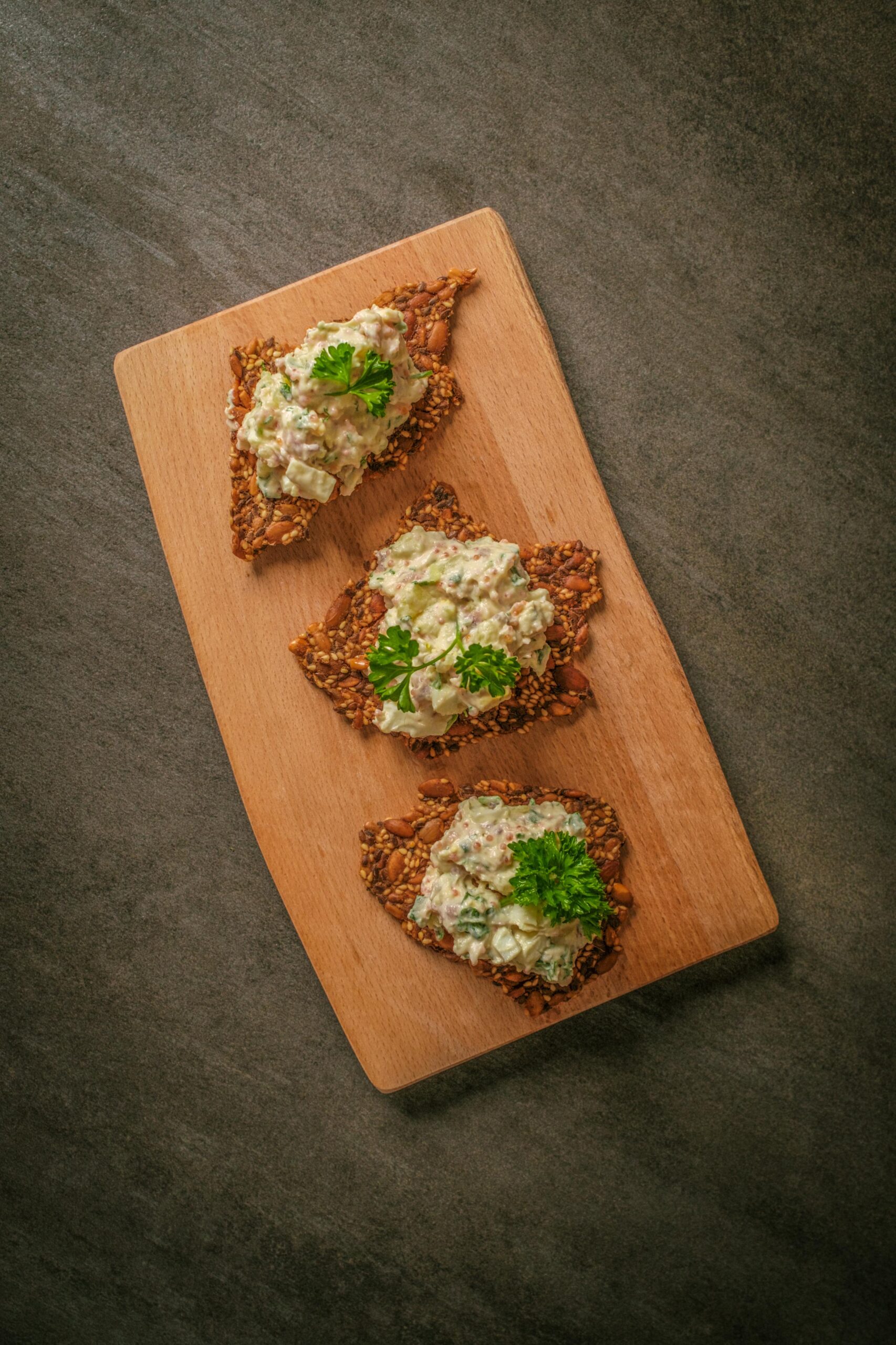
Knäckebröd — crispbread — is Sweden’s most ancient bread product. Made from rye flour and baked until completely dry, it can be stored for months without spoiling, which made it essential during the long Nordic winters. At Midsommar it serves as the base for herring, butter, and cheese, providing a textural contrast to the soft potatoes and the creamy accompaniments.
Västerbottensost deserves its own mention. This hard cheese from the Västerbotten region of northern Sweden has been produced since the 1870s, and its production method — which involves a specific ripening process at a particular temperature — gives it a deeply savoury, crystalline, intensely flavoured profile that has no close equivalent outside Sweden. It is sometimes described as a cross between aged Gruyère and Parmesan, but that does not quite capture its slightly granular texture and long, almost caramel-like finish. Västerbottensost has become so associated with Midsommar that supply shortages in June make national news — which has actually happened on multiple occasions when the dairy cooperative Norrmejerier has been unable to meet the pre-holiday demand.
Gravlax: Sweden’s cured salmon
Gravad lax — almost always shortened to gravlax — is the second fish course that typically appears on the Midsommar table alongside the herring. It is cured rather than cooked or smoked, and the difference matters both technically and culinarily.
The word gravad means “buried” in Swedish, and the name reflects the original preservation method: salmon was packed in salt and buried in the ground to ferment slightly under pressure. The modern version uses a mixture of salt, sugar, white pepper, and abundant fresh dill, applied directly to the fish and left for 24 to 48 hours under weight in the refrigerator. The result is a silky, translucent, intensely flavoured fish that holds the texture of fresh salmon while developing a more concentrated, herby, slightly sweet taste.
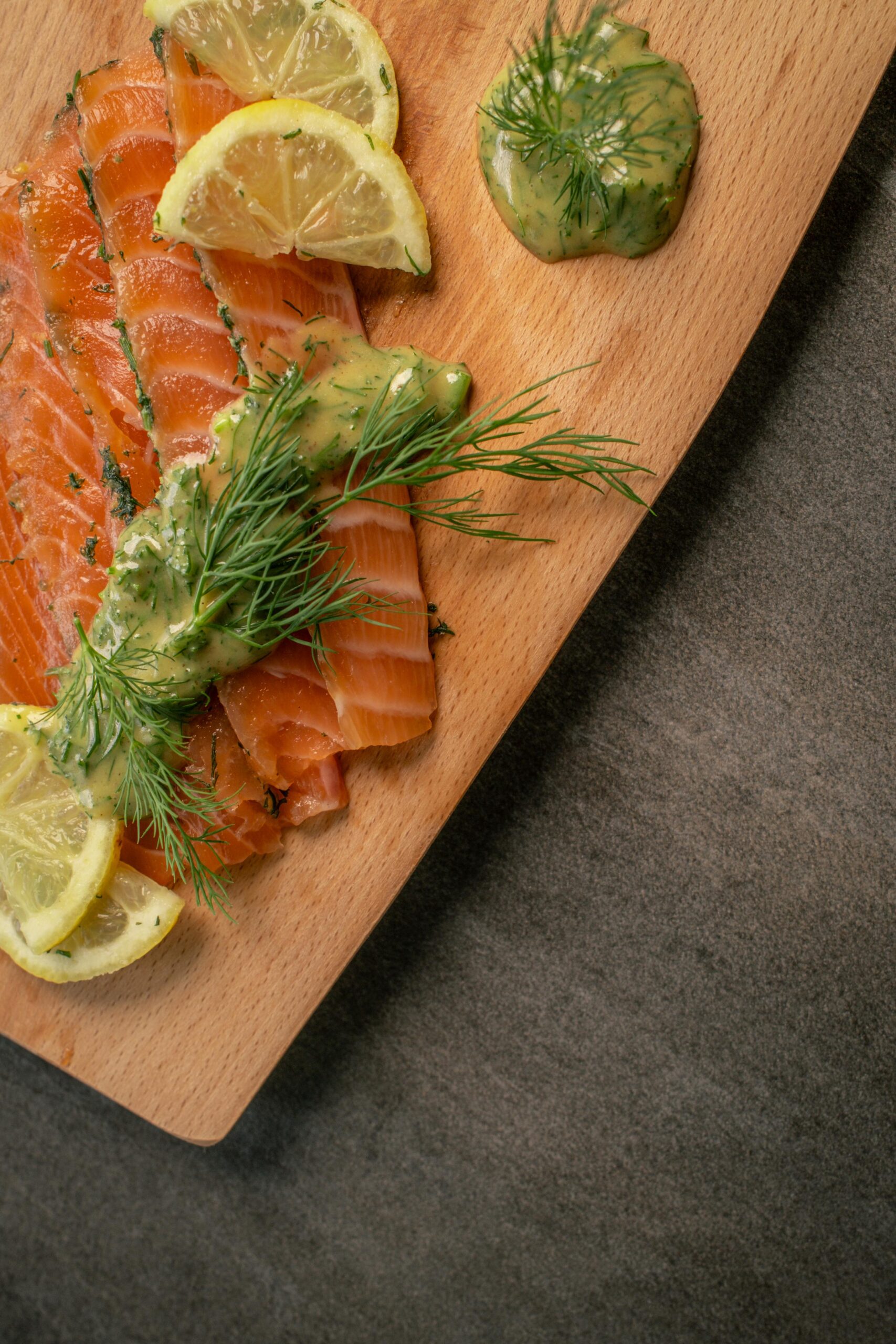
Unlike smoked salmon, gravlax has no heat applied to it and no smoky flavour. The texture is softer and the taste is cleaner, with the dill and sweetness of the cure coming through clearly. It is served thinly sliced, at room temperature, alongside hovmästarsås — the mustard and dill sauce that is as inseparable from gravlax as lemon is from oysters. Hovmästarsås translates literally as “head waiter’s sauce,” a reference to its historical origins in the fine dining restaurants of Stockholm where it was first paired with cured salmon in the 19th century.
Gravlax is available pre-made in every Swedish supermarket. It is also one of the dishes that Swedish home cooks most commonly prepare themselves in the days before Midsommar, since the curing process is straightforward and the result of a home-cured piece is noticeably better than most commercial versions.
Strawberries and the dessert course
The transition from the savoury smörgåsbord to the dessert course is one of the most anticipated moments of the Midsommar meal — and the dessert is always, without exception, Swedish strawberries.
Swedish jordgubbar are not the same as the large, commercial strawberries available in supermarkets year-round. Commercially grown strawberries for the global market are typically bred for size, durability, and shelf life — qualities that come at the cost of flavour. Swedish strawberries, grown in the cool northern climate with its exceptionally long summer days, ripen slowly and develop a dramatically higher concentration of sugars, aromatic compounds, and acids. The result is a berry that is smaller, softer, less uniformly shaped, and dramatically more flavourful than its imported equivalents.
Swedish strawberries are typically harvested from late June through July, which means Midsommar — usually in the third week of June — falls right at the beginning of the season. The timing is perfect and not entirely coincidental. The cultural significance of Midsommar as the beginning of summer aligns naturally with the first appearance of the season’s most celebrated fruit.
They are served simply: in a bowl with grädde (pouring cream) or vispad grädde (whipped cream), sometimes with a dusting of sugar. The most elaborate presentation is the jordgubbstårta — the strawberry cream cake — which is the defining dessert centrepiece of the Swedish summer. A jordgubbstårta is built on a base of airy sponge cake (sockerkaksbotten), filled and layered with vanilla pastry cream (vaniljkräm) and whipped cream, and generously topped and decorated with whole or halved Swedish strawberries. Sliced at the table and served in generous portions, it brings the formal meal to a close.

Other dessert options that sometimes appear include rabarberpaj — rhubarb tart or crumble, which is in season at the same time as early strawberries — and various cream-based desserts, but the jordgubbstårta is the default and the expectation.
Swedish strawberries in supermarkets are labelled “Svenska jordgubbar” and typically come in small cardboard punnets from local farms. They sell out rapidly in the days before Midsommar. If you want Swedish strawberries for the celebration, shop on Wednesday or Thursday — by Friday they may be gone.
Snaps, aquavit, and the drinking culture
No account of the Midsommar meal is complete without addressing the drinks — specifically the ritual consumption of snaps, the collective name for the distilled spirits drunk at the table.
Snaps and aquavit are used interchangeably in Swedish daily life, though they are technically slightly different. Aquavit (akvavit in Swedish) is the broader Nordic category of caraway-or-dill-flavoured distilled spirits. Snaps is the Swedish colloquial term for the small glass of spirit drunk at the table. Brännvin — which translates roughly as “burnt wine” — is the historical Swedish name for the same category of spirit, and appears in the names of several traditional brands.
The Swedish aquavit tradition
Swedish aquavit is typically grain-based and unaged — clear or very slightly tinted, served ice-cold, and consumed in small quantities alongside food. The botanicals that flavour it distinguish one brand from another.
O.P. Anderson is one of the oldest and most recognized Swedish aquavit brands, founded in Gothenburg in 1891. It is flavoured with caraway, anise, and fennel — a combination that creates a sharp, dry, herbaceous profile specifically designed to cut through the richness of pickled herring.
Skåne Akvavit is another traditional brand, slightly sweeter and lighter, with a less assertive botanical profile that works well for those who find O.P. Anderson too intense.
Hallands Fläder is named after the elderflower (fläder) that grows along the west coast of Sweden in early summer. It is a lighter, floral aquavit that pairs particularly well with the gravlax course and with the first strawberries. Its botanical profile is completely different from the caraway-dominant classics, and it has become increasingly popular among younger Swedes.
Gammal Norrlands Akvavit — Old Northern Aquavit — is a softer, sweeter style that incorporates sherry in its production, giving it a rounded, slightly oxidative quality that distinguishes it from the bright, unaged classics.
Swedish aquavit is quite different from Norwegian aquavit, which is potato-based, aged in old sherry casks, and served at room temperature. Norwegian aquavit — brands like Linie, which is famous for being shipped across the equator twice in sherry barrels as part of its ageing process — is golden in colour, rounder, smoother, and fundamentally different in character. Neither style is superior; they represent different culinary traditions.
The snapsvisa tradition
Snaps is never drunk alone and never drunk without a song. The snapsvisa tradition — drinking songs sung in unison before each glass — is one of the most socially important elements of the Midsommar table. The songs are short, often funny, and structured to end with a collective skål (cheers) before everyone drinks simultaneously.
The most famous is “Helan går” — “The Whole Goes Down” — which sets the rule that the first glass must be drunk in full. The second glass, halvan, is smaller. The songs vary by family, region, and generation, but the function is always the same: to synchronize the table, create a moment of collective participation, and pace the drinking so that it accompanies the food rather than overwhelming it.
Non-drinkers participate fully by filling their glass with water, juice, or one of the increasingly popular non-alcoholic aquavit alternatives. O.P. Anderson produces a non-alcoholic version of its classic spirit that replicates the caraway and fennel profile without the ethanol. Systembolaget — the state-run alcohol monopoly — stocks several non-alcoholic snaps options, and they are widely accepted at the table without any social awkwardness.
Beer is also drunk throughout the meal, typically Swedish lager such as Pripps Blå or Falcon, served very cold. The role of beer is more informal — it is consumed throughout the afternoon rather than in the structured toasting ritual of the snaps.
Regional variations: how the menu changes across Sweden
The core elements of the Midsommar menu are remarkably consistent across the country, but regional geography introduces meaningful variations that reflect local food culture and seasonal availability.
Dalarna
In Dalarna — considered the cultural heartland of Swedish Midsommar — the menu adheres most strictly to tradition. The smörgåsbord is typically the classic combination of herring, new potatoes, gravlax, and accompaniments, with very little room for improvisation. Älvdal potatoes, a local variety, are prized. The meal is often preceded by a cold buffet that includes locally made cheeses and cured meats from small regional producers.
West Coast — Bohuslän and Gothenburg
Along the west coast, where Sweden’s shellfish industry is concentrated, fresh seafood takes a prominent place alongside or instead of some of the traditional herring. Räkor — hand-peeled west coast shrimp — are the defining ingredient of the region, and at Midsommar they appear piled on plates, eaten with bread and butter and mayonnaise. Langoustines (havskräftor) are also common. The west coast meal is broader, more maritime, and less rigidly defined than the inland tradition.
Gotland
On the Baltic island of Gotland, local lamb (Gotlandslammkött) often appears alongside the fish courses, reflecting the island’s strong sheep-farming tradition. Local cheeses made from Gotlandic milk — softer and milder than mainland varieties — also feature. The overall character of Gotlandic Midsommar food is more varied and includes more meat than the standard mainland menu.
Northern Sweden
In the northern parts of Sweden, the new potatoes available at Midsommar may be imported from southern Europe rather than locally grown, since the Swedish season starts later at higher latitudes. Baltic herring (strömming) — the smaller, less fatty cousin of North Sea herring — is more commonly eaten in the north, sometimes pan-fried rather than pickled. The regional preference for sweeter aquavit styles is also notable.
Shopping logistics: when and where to buy Midsommar food
The week before Midsommar is one of the busiest retail periods of the Swedish year. Supermarkets expand their herring and salmon sections significantly from early June, and demand for Swedish strawberries and new potatoes peaks sharply in the two to three days before the holiday.
The single most important logistical fact for anyone planning a Midsommar meal is the Systembolaget closure. The state alcohol monopoly is completely closed on both Midsommarafton (Friday) and Midsommardagen (Saturday). Anyone who wants wine, beer, or snaps for the celebration must buy it by Thursday at the latest, and queues at Systembolaget on the Wednesday and Thursday before Midsommar can be long. Plan ahead or go without.
For the food itself, shopping Wednesday or Thursday gives the best selection of Swedish strawberries and new potatoes. By Friday morning, locally grown varieties are often sold out in most supermarkets. For specialty herring and gravlax, a fish market or food hall visit the week before gives the best results.
Key labels to look for: “Från Sverige” guarantees Swedish origin across any category of food. “Svensk färskpotatis” is specific to Swedish new potatoes. “Svenska jordgubbar” means Swedish strawberries. When buying herring, the brand name is often the most reliable indicator — established Swedish producers like Abba, Klädesholmen, and Göteborgs Fiskhamn are consistently well-regarded.
Why this particular menu is almost sacred
There is a reason Swedes do not swap the Midsommar herring for sushi or replace the new potatoes with a grain salad. The menu is not just food — it is a seasonal marker, an expression of where Sweden is in its agricultural calendar at the moment of the longest day.
Pickled herring represents the winter — the long months when preserved food was all that stood between a Swedish household and hunger. New potatoes represent the first real harvest of summer, the moment when fresh food becomes available again after months of root vegetables and preserved goods. Strawberries represent the peak of summer abundance, brief and precious. Together, they tell the story of the Swedish year in three courses.
This is a cuisine deeply connected to the rhythm of the seasons and to the agrarian history of a country that spent centuries living close to the edge of food security. When Swedes sit down to this specific meal in June, they are participating in something that goes far beyond personal preference. The menu is collective memory made edible. Changing it feels transgressive not because individual Swedes are inflexible, but because the meal itself carries meaning that transcends the individual occasion.
If you have been invited to a Midsommar celebration, the best thing you can do is arrive hungry, approach the herring with an open mind, and accept that the potatoes — warm, simple, and fragrant with dill — might just be the best thing you eat all year.
If you want to recreate the full Midsommar table at home — including step-by-step guidance for making gravlax, pickling your own herring, and baking a jordgubbstårta from scratch — the complete recipes are in the LikeSweden cookbook.
If you have questions about specific dishes, brands, or where to find particular ingredients in your region, leave a comment below. And if this kind of guide to Swedish food culture is useful to you, the LikeSweden newsletter is the best way to get more of it directly to your inbox.
Cook it the Swedish way
this summer
31 authentic recipes for the perfect Midsommar table — gravlax, silltårta, new potatoes, snaps & strawberry cake.