


Every year, in the third week of June, something peculiar happens across Sweden. Cities empty out almost overnight. Stockholm’s normally busy streets go quiet. Shops close, trains fill up, and several million people simultaneously relocate to lakeside cottages, island harbours, and forest clearings to eat pickled herring, dance around a decorated pole, and pretend to be frogs. If you have just moved to Sweden, or you are visiting for the first time, Midsommar is the single holiday you need to understand — not just because it is spectacular, but because it reveals more about Swedish culture and identity than almost anything else.
- What is Midsommar and when does it happen?
- A history in three acts
- The maypole: what it is and what it is not
- The dances: everyone joins in, no experience required
- The food: herring, potatoes, and strawberries
- The folklore of Midsommar night: flowers, dew, and magic
- Where to celebrate: from Dalarna to the archipelago
- Dalarna: the heart of Swedish Midsommar
- Skansen, Stockholm
- The Stockholm archipelago
- The West Coast
- Gotland
- Northern Sweden and the midnight sun
- Midsommar and Swedish identity
- Midsommar for immigrants and visitors: what you need to know
- How Midsommar is changing: tradition and modernity
- Practical information: logistics, closures, and transport
Cook it the Swedish way
this summer
31 authentic recipes for the perfect Midsommar table — gravlax, silltårta, new potatoes, snaps & strawberry cake.
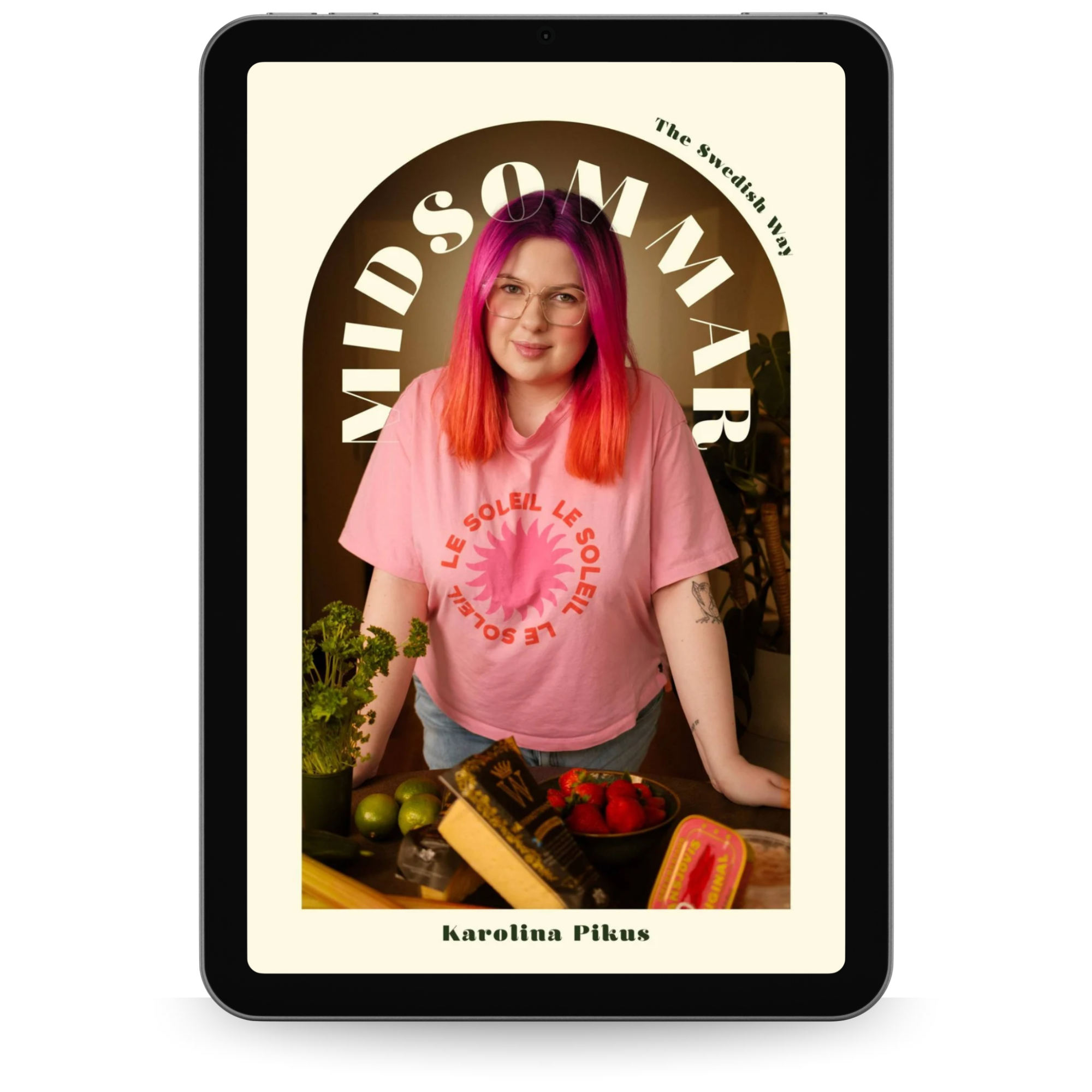
This guide covers everything: what Midsommar actually is, what happens at a typical celebration, the folklore behind the traditions, where the best events take place, and exactly what you need to know if someone invites you to their summer cottage for the weekend.
What is Midsommar and when does it happen?
Midsommar (midsommar in Swedish) is the holiday that marks the summer solstice — the longest days of the year. In Sweden, the main celebration takes place on Midsommarafton, which is always the Friday between June 19 and June 25, followed by Midsommardagen on the Saturday.
In 2026, Midsommarafton falls on Friday, June 19. Midsommardagen on Saturday, June 20, is an official public holiday (röd dag). Midsommarafton itself is not a formal red day in law, but under Swedish collective labor agreements, it is treated as one — almost all businesses close, and the day effectively functions as a public holiday for the entire country.
This arrangement dates from 1953, when Sweden moved Midsummer’s Eve from its traditional fixed date on June 24 — the feast day of St. John the Baptist (Johannesdagen) — to the nearest Friday. The change was purely practical: it gave Swedes a guaranteed long weekend rather than a holiday that could fall on a Wednesday. The cultural content of the celebration stayed exactly the same; only the calendar moved.
A history in three acts
Midsommar’s roots are ancient. Long before Christianity arrived in Scandinavia, the summer solstice was a time of profound agricultural significance — the moment when daylight was longest, crops were growing, and the world felt most alive. Communities gathered around bonfires, performed rituals to ensure a good harvest, and celebrated the power of the sun.
When Christianity spread through Sweden during the medieval period, the Church absorbed this existing celebration and reframed it as the feast of St. John the Baptist, whose birth is commemorated on June 24. The pre-Christian and Christian layers coexisted for centuries, creating a hybrid holiday with one foot in folk magic and the other in religious tradition.
By the 20th century, Sweden had largely secularized, and Midsommar shed most of its religious framing. What remains today is a purely secular cultural celebration — one with no spiritual obligations but with very specific and well-preserved rituals that Swedes take seriously. According to research by the Nordiska museet, Sweden’s national museum of cultural history, Midsommar consistently ranks alongside Christmas as one of the two most widely celebrated holidays in the country, with active participation rates far exceeding those of the official Swedish National Day on June 6.
The maypole: what it is and what it is not
The midsommarstång — the Midsummer pole, often called a “maypole” in English — is the visual centrepiece of any Swedish celebration. It is a tall wooden pole, typically decorated with birch branches and wildflowers woven into rings and garlands. Two smaller rings hang horizontally from a crossbar near the top, giving the pole its distinctive silhouette that resembles a large cross or anchor shape.
Despite widespread speculation, the pole is not a pagan fertility symbol. Sweden’s leading cultural historians, including researchers at the Nordiska museet, are clear on this: the word midsommarstång derives from the old Swedish verb maja, meaning to decorate with green foliage. The decorated pole tradition was imported from Germany during the Middle Ages, where similar decorated poles were used in May Day celebrations. It arrived in Sweden, absorbed local plant and flower decorations, and became associated with Midsummer rather than May.
How the pole is raised
Raising the maypole is a community event, usually organized by local associations, sports clubs, homeowners’ societies, or municipalities. The process involves lifting the pole manually using long support poles called saxar (scissors), with a coordinated team guiding it upright while a crowd watches and often assists. It is genuinely physical work — larger poles in places like Dalarna can be ten metres tall or more — and the raising typically happens on Midsommarafton in the early afternoon, before the dancing begins.
Once the pole is upright, the real celebration starts.
The dances: everyone joins in, no experience required
The ring dances around the maypole are the most distinctively Swedish element of the whole holiday, and they are one of the most surprising things about Midsommar for newcomers. Swedes, who are famously reserved in everyday social life, abandon their inhibitions entirely when the music starts and dance in circles around the pole doing movements that involve hopping, arm-waving, and imitating animals. Everyone joins in, from small children to grandparents. Nobody is too old, too sophisticated, or too sober to participate.
The most famous dance is Små grodorna — “The Little Frogs.” Participants stand in a circle, crouch down, flap their hands like frog legs, and sing about frogs who have neither ears nor tails, hopping around accordingly. The melody has an amusing history: it traces back to a 19th-century French military march that was adapted by British soldiers to mock the French, eventually travelled across Europe, and somehow ended up as the defining song of Sweden’s most important cultural holiday. Nobody finds this strange.
Other classic dance songs include Karusellen (The Carousel), where the circle spins and participants lean outward; Prästens lilla kråka (The Priest’s Little Crow), a call-and-response song with animal movements; Vi äro musikanter (We Are Musicians), where participants mime playing different instruments; and Å jänta å ja (The Girl and I), a traditional folk melody played by live musicians at more traditional celebrations.
At public events and larger gatherings, a folk music ensemble (spelmän) typically plays fiddles and accordions to accompany the dances. At private cottage celebrations, the music often comes from a phone or a speaker, but the dances remain the same.
The food: herring, potatoes, and strawberries
The Midsommar meal follows a very specific structure that most Swedes treat as essentially non-negotiable. It is eaten at lunch or early afternoon, before the maypole dancing begins or shortly after.
The herring table
The centrepiece of the Midsommar smörgåsbord is pickled herring (sill). Multiple varieties are typically served, allowing guests to try different flavour profiles. The most common are senapssill (mustard herring), löksill (onion herring), inlagd sill (plain pickled herring in brine), and kryddad sill (spiced herring with allspice and bay leaf). These are eaten cold, straight from the jar or dish.
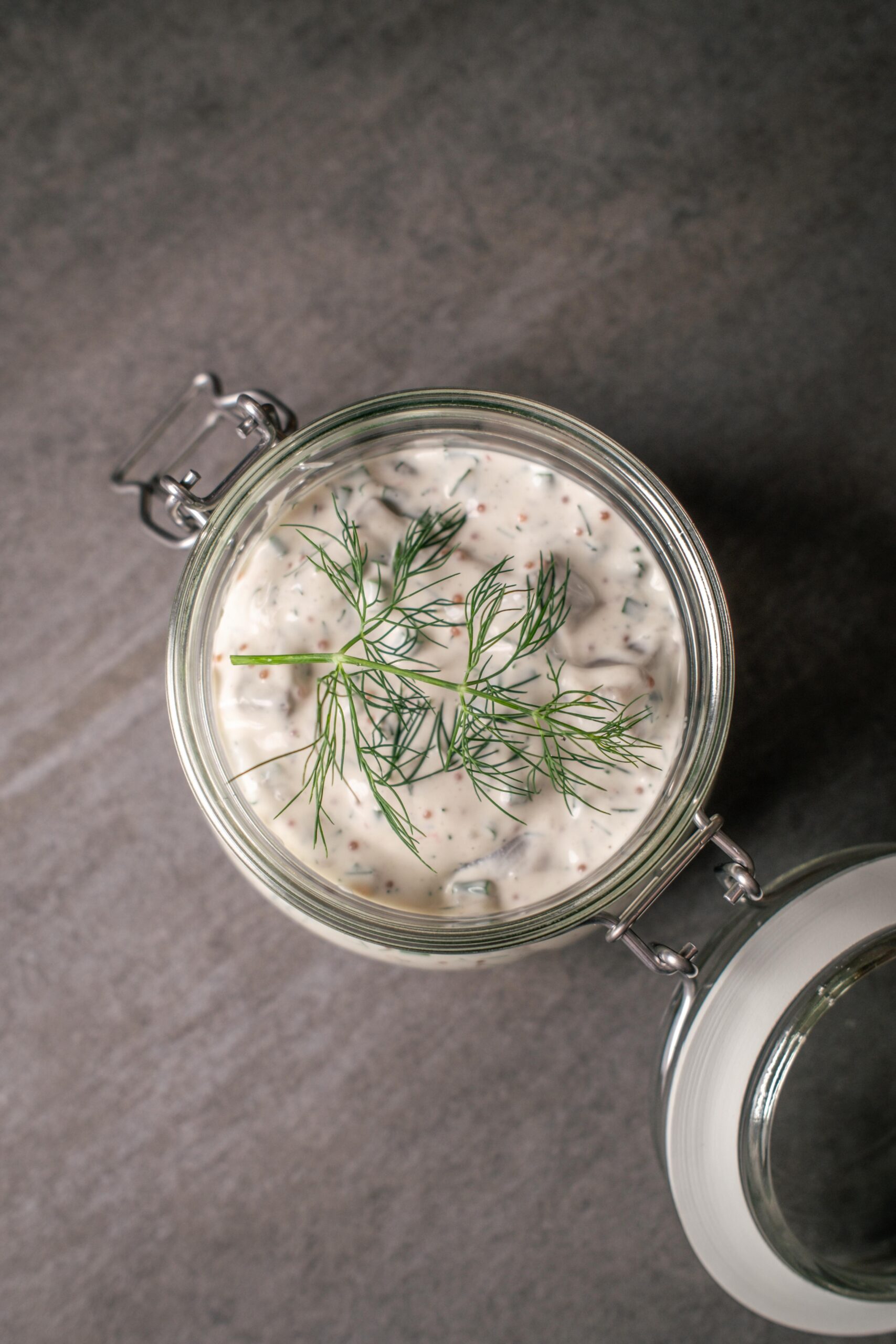
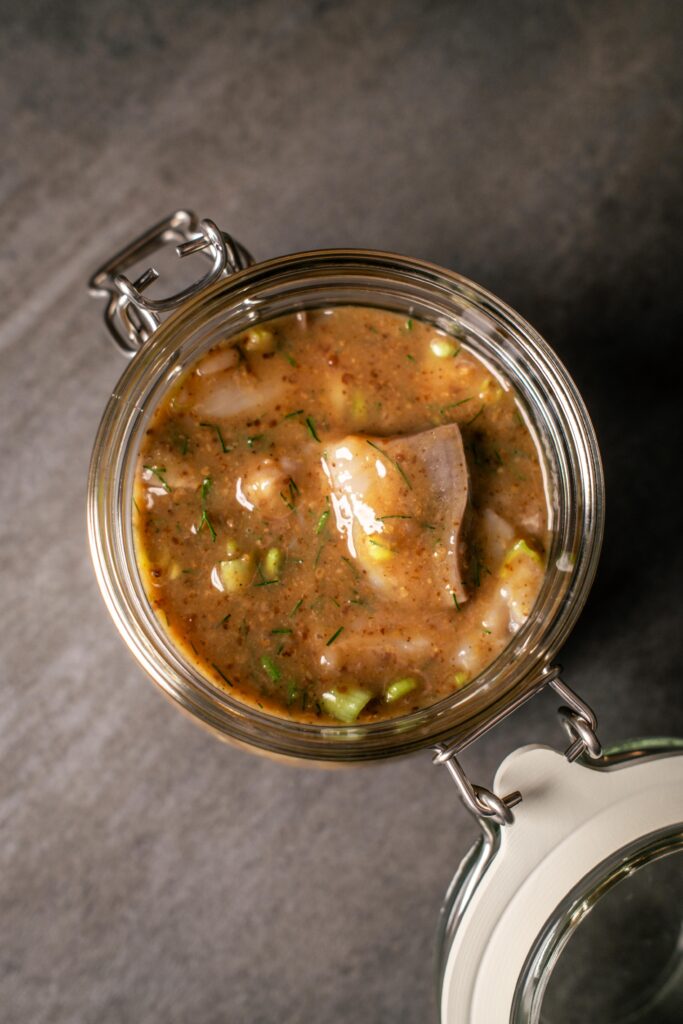
Alongside the herring: new potatoes (färskpotatis or nyskördad potatis), boiled with fresh dill and served warm. The combination of cold pickled herring and warm dill potatoes is one of the defining flavour memories of Swedish summer. A dollop of gräddfil (soured cream, similar to crème fraîche) and finely chopped gräslök (chives) complete the plate.
Snaps and the drinking songs
Midsommar is one of the three major snaps occasions in the Swedish calendar, alongside Midsummer, crayfish parties in August, and Christmas. Snaps is the Swedish name for aquavit — a clear or lightly golden spirit flavoured with caraway, dill, fennel, or other herbs, served cold in small glasses. At a traditional Midsommar table, the snaps is drunk in unison after singing a snapsvisa — a drinking song.
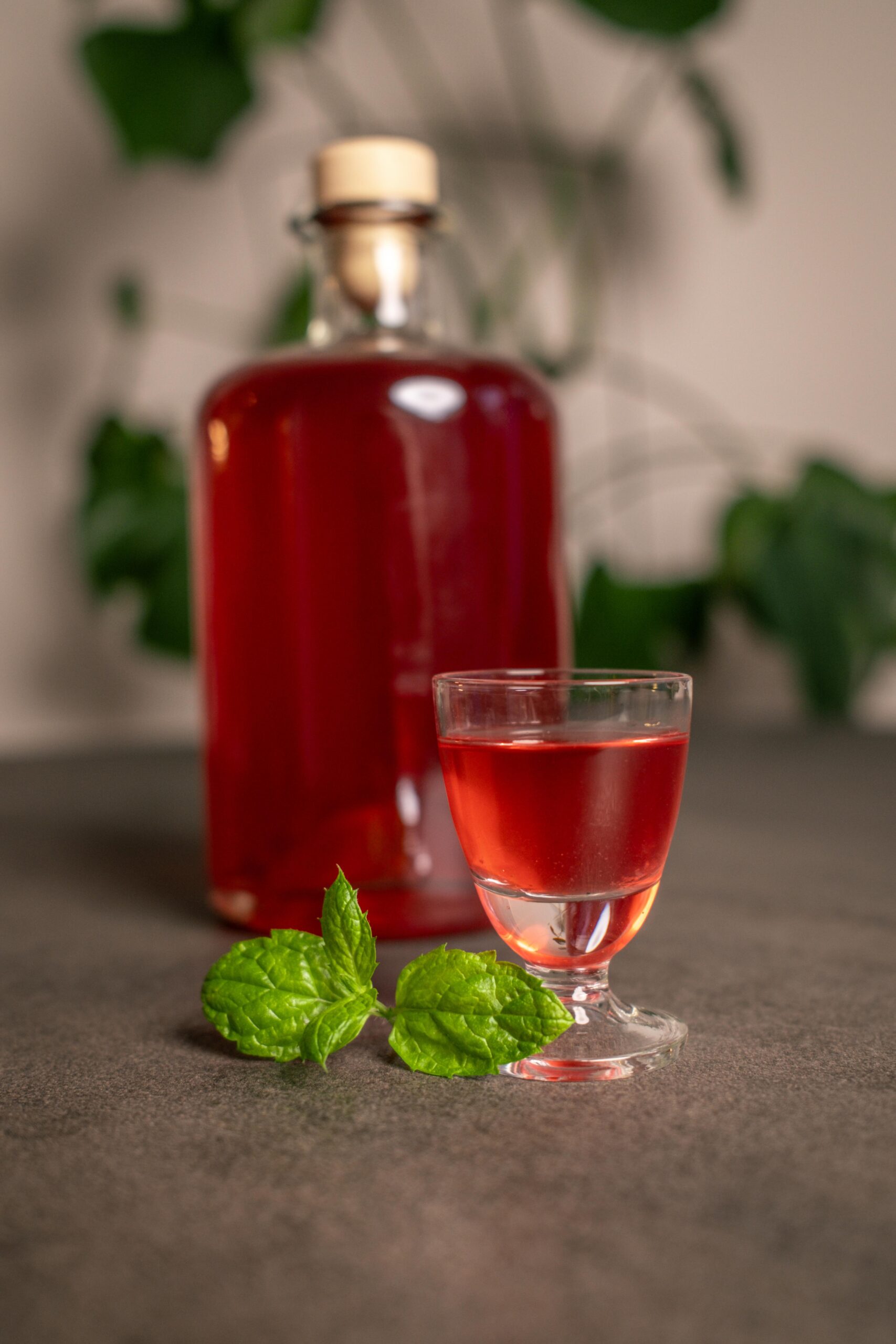
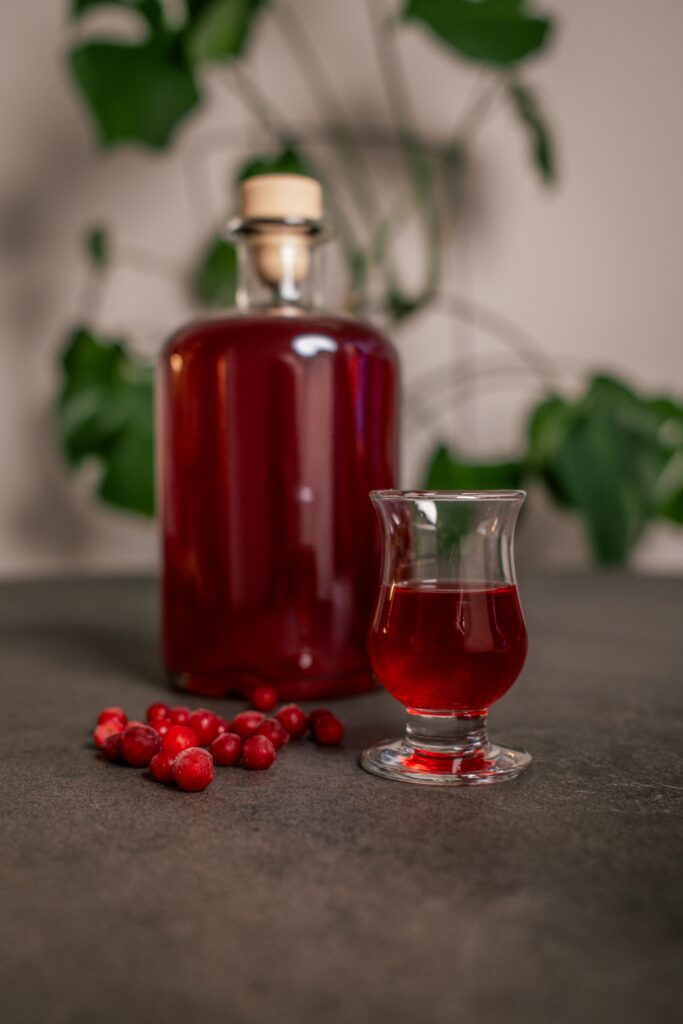
The most well-known snapsvisa is Helan går — “The Whole One Goes Down” — followed by Halvan går (“The Half Goes Down”) for a second, smaller shot. These are sung before each round. The ritual of learning and participating in snapsvisa is one of the most accessible entry points into Swedish social life for foreigners, because it requires absolutely no prior knowledge — you just follow what everyone else does and sing whatever words you catch.
For those who do not drink alcohol, the situation is well catered for. Most Swedish supermarkets and specialty drink shops sell non-alcoholic aquavit (alkoholfri snaps) in herbal flavours that closely mimic the taste of real aquavit. Raising a glass of lättöl (light beer), juice, or sparkling water works equally well — the point of the ritual is the communal gesture of skål, not the alcohol itself.
Strawberries
The meal ends with fresh strawberries (jordgubbar) and cream. Swedish strawberries, picked at peak ripeness in late June, are small, intensely sweet, and smell nothing like the large commercial strawberries available year-round. Getting to eat them at the beginning of the season, at a table outside in warm summer light, is one of those specific sensory experiences that Swedes who grow up here carry with them as a permanent emotional marker of what summer means.
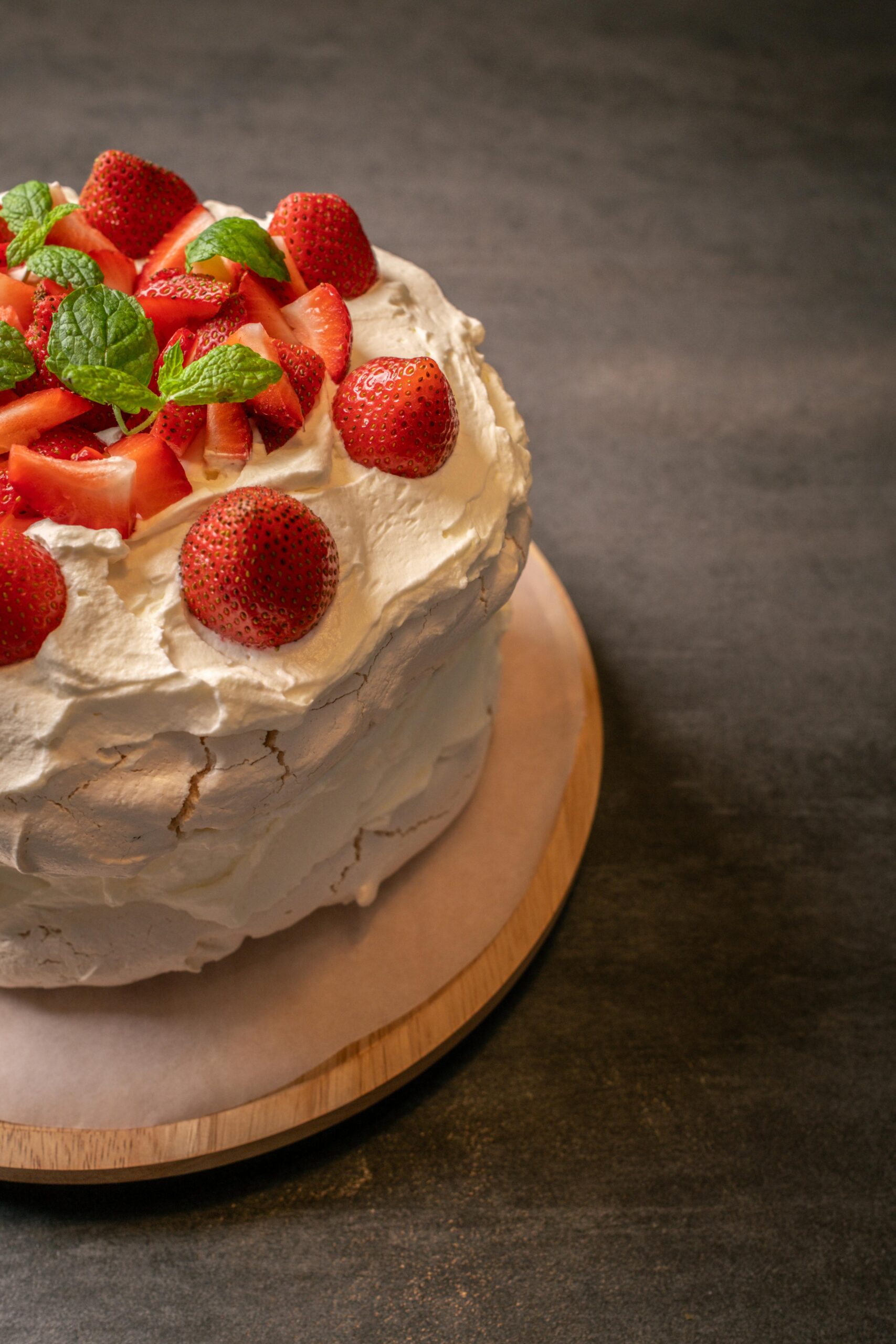
The strawberries are typically served with grädde (whipped cream) or vaniljsås (vanilla sauce), sometimes with jordgubbstårta — a strawberry cream cake built on a layer of sponge with fresh berries and whipped cream — as the centrepiece dessert.
The folklore of Midsommar night: flowers, dew, and magic
Midsommar night has been understood as a time of heightened magical possibility for as long as written Swedish records exist. The Nordiska museet’s extensive archive of folk beliefs documents a rich tradition of rituals and omens associated with what was believed to be the night when the boundary between the human and supernatural worlds was at its thinnest.
The seven flowers
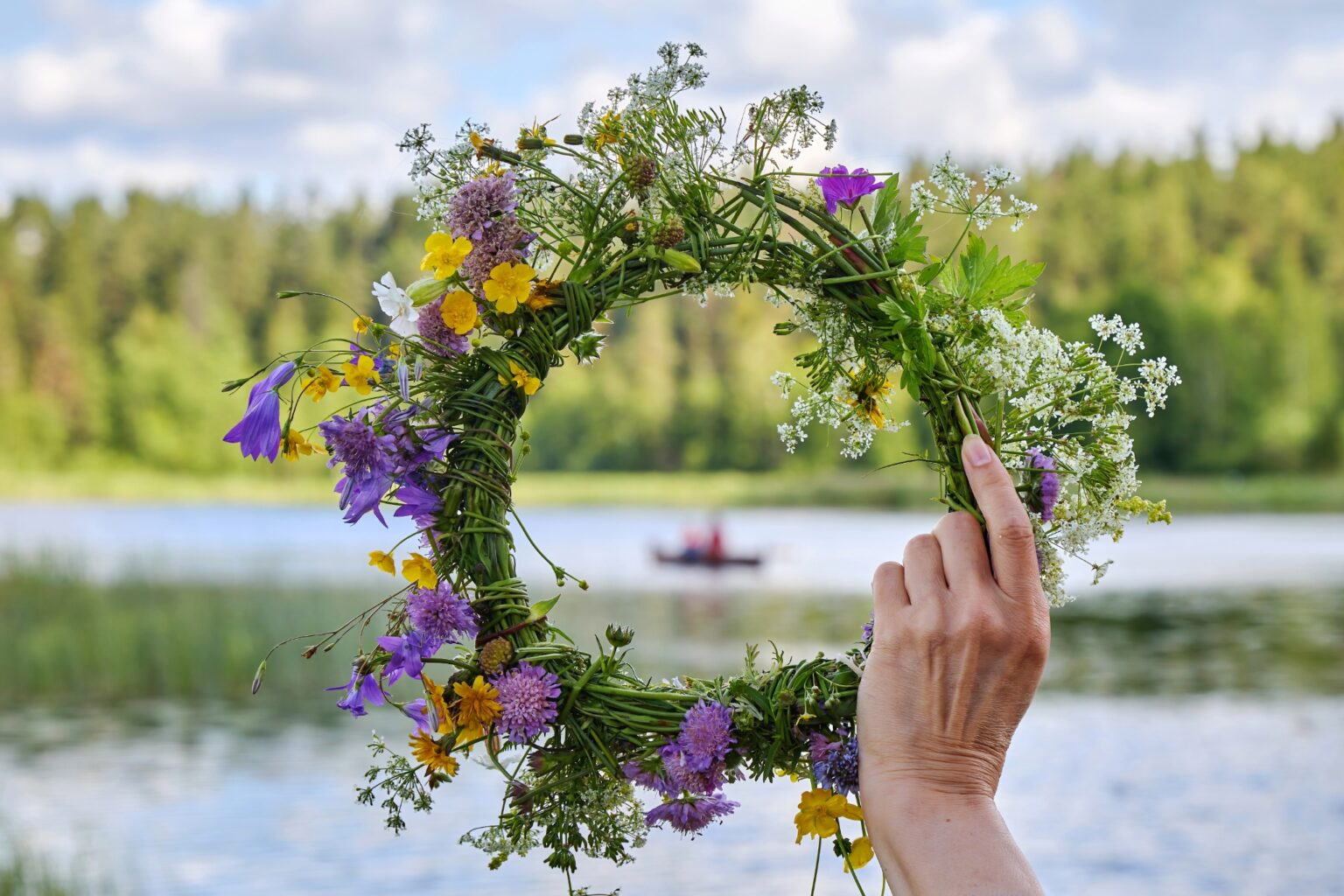
The best-known folk tradition associated with Midsommar — practiced across Scandinavia and still performed, at least symbolically, by many Swedes today — involves wildflowers. According to the tradition, if a young unmarried person picks seven different wildflowers in complete silence on Midsommar night, crosses seven fences or boundaries, and places the flowers under their pillow before sleeping, they will dream of their future spouse. In some regional variations, the number is nine flowers and nine fences. The silence is essential — speaking breaks the spell.
The wildflowers most commonly associated with this ritual are those that bloom in late June across Swedish meadows: smörblomma (buttercup), prästkrage (ox-eye daisy), blåklint (cornflower), rödklöver (red clover), johannesört (St. John’s wort), vitklöver (white clover), and kärringtand (bird’s foot trefoil).
Johannesdagg and the magic of herbs
Another tradition, now largely historical but still referenced in Swedish cultural accounts, is Johannesdagg — St. John’s dew. On Midsommar morning, the dew on the grass was believed to carry special healing and protective properties. In older agrarian practice, women and girls would wash their faces in the morning dew, or even roll in it, to ensure good health for the coming year. Dew collected in special vessels was used to bake bread or treat skin conditions.
Medicinal herbs were also considered to be at their most potent when harvested at midnight on Midsommar night. Johannesört (St. John’s wort) and Vänderot (valerian) were particular favourites, gathered at the solstice and dried for use throughout the year.
The supernatural inhabitants of the Swedish landscape were also believed to be especially active on this night. Näcken, the water spirit who lives in lakes and rivers and lures people to their deaths with beautiful fiddle playing, was said to emerge at Midsommar. The skogsrå, a forest-dwelling being who appears as a beautiful woman from the front but hollow and covered in bark from behind, was believed to be particularly dangerous to men who wandered into the forest alone. These figures are now part of cultural memory rather than active belief, but they persist in folk art, literature, and the names of products and places across Sweden.
Where to celebrate: from Dalarna to the archipelago
Midsommar celebrations take place across the entire country, but some places have built reputations for celebrations that draw visitors from far away.
Dalarna: the heart of Swedish Midsommar
If there is one province that Swedes themselves would point to as the authentic cultural home of Midsommar, it is Dalarna. The towns and villages around Lake Siljan — particularly Leksand, Rättvik, and Mora — have preserved Midsommar traditions with an intensity and continuity unmatched elsewhere in Sweden.
Leksand is famous for Gropen, a natural amphitheatre in the town centre where the Midsommar celebrations have taken place for generations. The maypole raised at Gropen is one of the tallest in Sweden, and the event regularly attracts between 20,000 and 25,000 visitors over the weekend. Celebrations include folk music, traditional ring dances, and performers in local folk costumes (folkdräkter) that are specific to individual parishes and carry centuries of local identity.
Rättvik is known for the spectacular tradition of kyrkbåtar — church boats. Decorated wooden boats bring participants across Lake Siljan to the celebrations, arriving garlanded with birch branches and flowers, rowed by men in traditional dress to the sound of fiddles playing. The image of flower-decorated boats arriving across a still lake in the long Nordic summer light is one of the most visually striking things in Swedish cultural life.
Skansen, Stockholm
For visitors who are in Stockholm and cannot travel to the countryside, Skansen — the world’s oldest open-air museum, located on Djurgården island — hosts what it describes as Sweden’s largest Midsommar weekend event. The celebration runs over three days, with maypole raising, folk dances, traditional music, and family activities spread across the historic buildings and farmsteads of the museum. Skansen draws tens of thousands of visitors over the weekend and offers a curated, educational version of the traditions alongside an authentic festive atmosphere.
The Stockholm archipelago
The Stockholm archipelago — the roughly 30,000 islands, islets, and rocks that spread east of the city into the Baltic — is an increasingly popular destination for Midsommar. Individual islands and communities hold their own maypole raisings, and the atmosphere is more maritime and informal than in Dalarna. Historic island communities like Sandhamn, Grinda, and Vaxholm see flotillas of private boats arrive for the weekend. Waterfront restaurants are fully booked months in advance.
The West Coast
Along the West Coast of Sweden — the Bohuslän coastline north of Gothenburg — Midsommar is celebrated in a more relaxed, outdoor style among granite rocks, fishing villages, and camping sites. Communities decorate boats with birch branches, and maypoles go up in village squares and campsite clearings alike.
Gotland
The island of Gotland, in the Baltic Sea, has developed its own distinct Midsommar culture. Celebrations near Visby and at family resorts across the island combine traditional dances with the particular atmosphere of a medieval walled city and a Baltic island summer. Events in and around Visby typically run across the full weekend.
Northern Sweden and the midnight sun
North of the Arctic Circle — in places like Riksgränsen in Lapland — Midsommar coincides with the midnight sun, when the sun does not set at all. The effect is disorienting in the best possible way: the maypole dance, the herring, and the snaps all take place in full daylight at midnight, with the sun still above the horizon. Some resorts combine Midsommar celebrations with late-night skiing, which is as Swedish an experience as it is possible to have.
Midsommar and Swedish identity
Understanding what Midsommar means to Swedes requires understanding the context of the Swedish winter. Sweden, particularly above Stockholm, experiences winters of genuine darkness — not just cold, but months where daylight is limited to a few hours, mornings and evenings are pitch black, and the psychological weight of the dark is something that many Swedes describe as a significant feature of their inner lives.
Midsommar is the counterpoint to all of that. It is the annual collective acknowledgement that the light has returned, that the outdoor season has truly begun, and that Sweden is, at its core, a nature-oriented culture. The concept of friluftsliv — outdoor living, the practice of spending time in nature as a fundamental part of a good life — is deeply embedded in Swedish identity, and Midsommar is its annual peak expression.
Sweden has roughly 600,000 summer cottages (sommarstugor or stugor), which means that a very large proportion of the population has access to a country house or island cabin where they spend weekends and holidays between June and August. Midsommar is the opening weekend of this culture — the moment when the cottage season begins in earnest, when family groups gather in places they have been coming to for generations, and when the particular combination of nature, food, and tradition that defines Swedish summer comes together.
Midsommar for immigrants and visitors: what you need to know
If a Swedish colleague, friend, or neighbor invites you to a Midsommar celebration, say yes. It is one of the most genuinely welcoming Swedish social situations you will encounter, precisely because the structured rituals — the food, the dancing, the skål — give everyone a script to follow, which removes the social awkwardness that can sometimes characterize more unstructured Swedish social settings.
What to bring
Most private Midsommar celebrations follow a knytkalas format — a potluck where guests bring their own drinks and a contribution to the food. If you have been invited without specific instructions, a good default is to bring a jar of pickled herring (available at every Swedish supermarket), something to drink, and a dessert contribution. Flowers are also welcome and appropriate.
Dress code
There is no formal dress code, but weather-appropriate layers are essential. Swedish June weather is famously unpredictable — it can be 25 degrees and sunny at lunch and 12 degrees and raining by evening. Bring a waterproof jacket, a warm layer for the evening, and sturdy shoes for outdoor dancing on uneven ground. A flower crown (blomsterkrans) woven from wildflowers is entirely optional but entirely accepted.
The dances
You do not need to know the dances before you arrive. Watch the circle for one round, then join in. The movements are simple and repetitive, and nobody will judge you for getting them wrong. The specific Swedish social reserve that can make initial conversation in Sweden feel effortful dissolves almost completely during the ring dances — this is one of the relatively rare contexts where Swedes are genuinely uninhibited in public.
The snaps culture
Participate in the skål gesture — raise your glass, make eye contact with the people around you, say skål, drink, and make eye contact again before putting your glass down. This sequence is important. Skipping the eye contact before putting the glass down is considered slightly rude. Non-alcoholic snaps is accepted without any social stigma; many Swedes drink it, and any Swedish host will have non-alcoholic options available.
The language
Most Swedes speak very good English and will happily switch languages for guests. At public events, announcements are often made in Swedish only, but the activities themselves — the dancing, the eating, the general atmosphere — require no Swedish at all.
How Midsommar is changing: tradition and modernity
Midsommar is one of those Swedish traditions that has shown remarkable resilience. Unlike some other European folk holidays that have faded into purely symbolic observance, it remains actively and enthusiastically celebrated by the vast majority of Swedes across all generations.
That said, the way it is celebrated has evolved. Younger generations often celebrate in larger, more mixed social groups rather than exclusively with family. The traditional ring dances remain, but they are more likely to happen for thirty minutes before the group moves on to games of Kubb (a Swedish outdoor throwing game), barbecuing, and an evening that involves contemporary music. Flower crowns have become a significant social media aesthetic, driving a small but real increase in younger women engaging with the tradition in a way that is both authentic and Instagram-visible.
The commercial side of the holiday has grown. Swedish supermarkets begin their Midsommar marketing weeks in advance, selling pre-packaged herring assortments, flower crown kits, birch branches, and Midsommar-themed tableware. The holiday has also attracted significant international attention — particularly through Ari Aster’s 2019 film Midsommar, which used authentic Swedish folk imagery in a horror context and generated a noticeable spike in international searches for the real holiday.
The debate about commercialization versus authenticity that surrounds Midsommar is the same debate that surrounds most major cultural holidays in any country. The traditions themselves — the pole, the herring, the flowers, the skål — show no sign of disappearing.
Practical information: logistics, closures, and transport
Midsommar weekend is one of the most difficult travel weekends of the year in Sweden. Planning ahead is not optional.
Transport
Major highways — particularly those leading out of Stockholm toward the west (E18, E4 north and south), Gothenburg, and Dalarna — experience their heaviest traffic of the entire year on Thursday afternoon before Midsommarafton. Many Swedes leave work early or take Thursday off entirely to avoid the worst of it. If you are traveling by car, either leave before noon on Thursday or wait until Saturday afternoon when the outbound traffic has cleared.
Train tickets on the routes to popular Midsommar destinations — particularly Stockholm–Mora (Dalarna) and Stockholm–Gothenburg — sell out weeks or months in advance. Book as early as possible. Overnight trains are often fully booked even earlier.
What is closed
Systembolaget — the state-run alcohol retail monopoly — is completely closed on both Midsommarafton and Midsommardagen. This applies to every location in the country. If you plan to bring wine, beer, or spirits to a celebration, you must buy it before the holiday weekend begins. Most supermarkets also close early on Midsommarafton and may be closed or operating on reduced hours on Midsommardagen.
Most shops, pharmacies, government offices, banks, and many restaurants are closed on Midsommardagen. Some restaurants and tourist-oriented establishments in city centers remain open, but their menus and hours may be limited. Plan accordingly.
Accommodation
Accommodation in popular Midsommar destinations — Leksand, Rättvik, Sandhamn, Visby, and similar locations — is booked out months in advance. If you are traveling specifically to experience Midsommar celebrations, book your accommodation as soon as you know your dates. The official Visit Sweden website and regional tourism boards list public events and accommodation options.
Midsommar in Sweden is not a spectator sport. It is participatory, informal, generous, and — once you know what to expect — one of the genuinely wonderful experiences available to anyone who spends time in this country. If you get invited to someone’s summer cottage, you now know exactly what to do.
If you have questions about Midsommar — or if you have already experienced one and want to share how it went — leave a comment below. And if this kind of guide to Swedish culture and life is useful to you, the LikeSweden newsletter is the best way to get more of it straight to your inbox.
Cook it the Swedish way
this summer
31 authentic recipes for the perfect Midsommar table — gravlax, silltårta, new potatoes, snaps & strawberry cake.