


There is a moment that almost every foreigner in Sweden experiences at some point around early June. You hear about Midsommar in Sweden constantly — at work, from your Swedish friends, in the supermarket where pickled herring suddenly occupies half the aisle. You know it is important. You might have seen the flower crowns on Instagram. You may even have watched Ari Aster’s film with a growing sense of unease. And then someone invites you — or does not invite you — and you are not quite sure how to respond, what to bring, whether you are supposed to know the words to the frog song, or how to get out of the drinking ritual without causing offence.
- Why Midsommar is the most effective integration tool in Swedish social life
- Getting an invitation — and what it means when you do
- What to bring: the knytkalas and the alcohol question
- What to wear: a practical guide to Swedish June weather
- The social dynamics: what changes and what stays the same
- The ring dances: how to participate when you have no idea what you are doing
- The snaps ritual: a step-by-step guide to the most important moment at the table
- Conversation: what to ask, what to avoid, and how to use the day to improve your Swedish
- Common mistakes: what to avoid
- Where to find a public Midsommar celebration
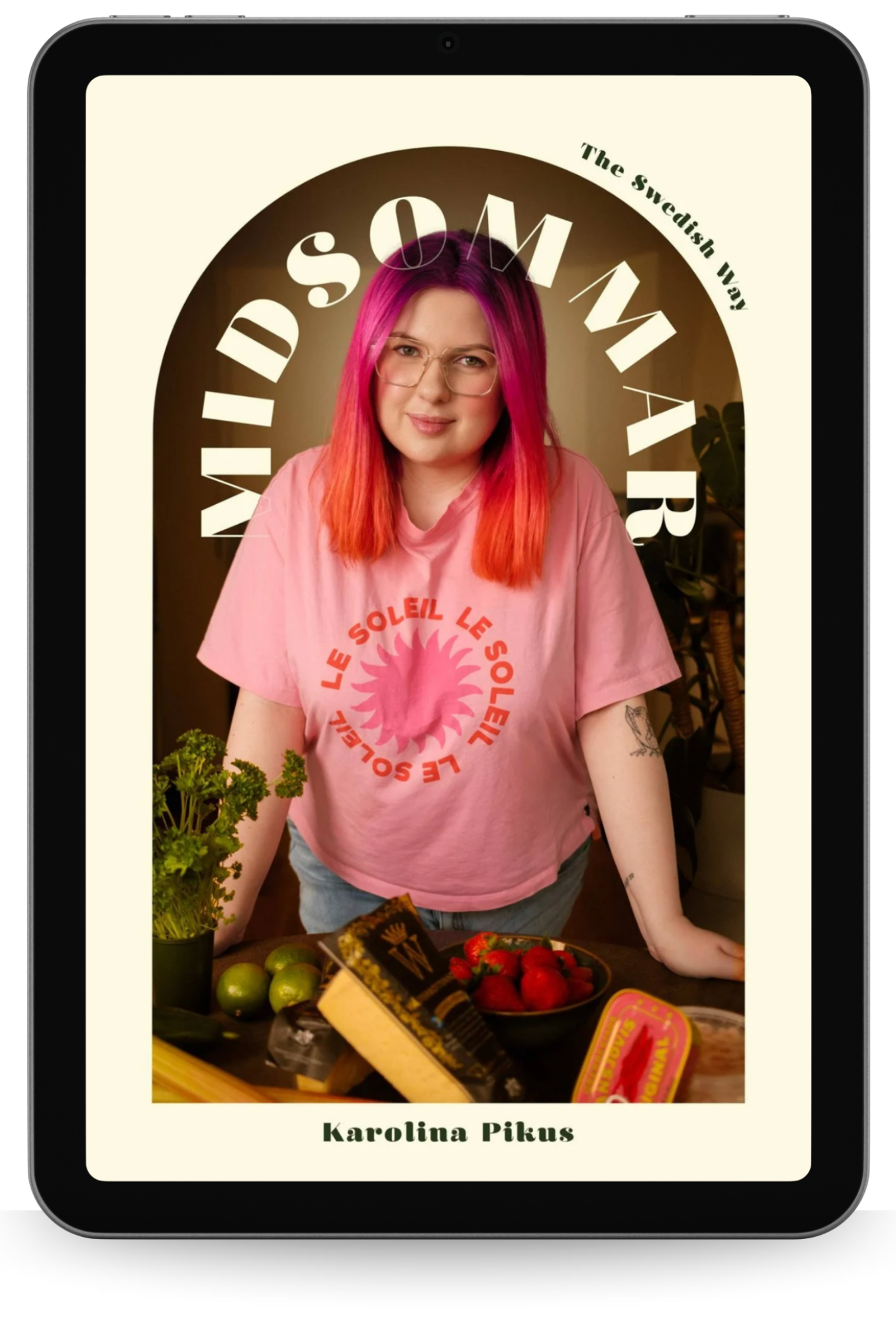
Cook it the Swedish way
this summer
31 authentic recipes for the perfect Midsommar table — gravlax, silltårta, new potatoes, snaps & strawberry cake.
This guide answers all of those questions. Whether you have just arrived in Sweden or have been here for years, whether you have a warm private invitation or you are turning up alone to a public celebration, this is the practical and cultural briefing you need before June 19, 2026.
Why Midsommar is the most effective integration tool in Swedish social life
Swedes have a reputation — not entirely unfair — for being private, slow to open up, and somewhat difficult to befriend in ordinary social situations. The concept of jantelagen — the cultural norm of not standing out, not imposing yourself, not making others feel observed — can make everyday socializing feel somewhat formal and restrained. Breaking through this exterior in winter, in an office, or at a networking event can feel like trying to chip through concrete.
Midsommar is different. The psychological release of the long summer light, the communal outdoor setting, the structured rituals of the table and the dances — all of this creates a social environment that simply does not exist at other times of the year. People who have lived next to each other for two years without a real conversation will find themselves dancing in a linked circle together. Colleagues who exchange only formal pleasantries in the office will sing drinking songs with genuine enthusiasm. The rigid distinctions between professional acquaintances and actual friends dissolve, and the cost of making first contact drops dramatically.
For immigrants and foreigners, Midsommar represents what relocation specialists describe as a structured inclusion event — a moment where the normal social barriers temporarily dissolve and the path toward genuine connection is shorter than at any other point in the Swedish calendar. Embracing it fully — dancing, eating, singing, staying until late — is not just fun. It is arguably the most effective single thing you can do to build real relationships in Sweden.
Getting an invitation — and what it means when you do
The most authentic Midsommar celebrations are not grand public events but deeply private gatherings. As the holiday approaches, Swedish cities empty. People relocate to family summer cottages (sommarstugor), islands, and ancestral villages. The sommarstuga is often a multi-generational sanctuary — a place that holds decades of family memory. Being invited there for Midsommar is not a casual gesture. It signals genuine trust and means you have moved from the category of acquaintance into something closer to inner circle.
Invitations typically come through colleagues, neighbors, friends, or partners. If you have been in Sweden long enough to have built one real Swedish friendship, there is a reasonable chance Midsommar will surface naturally in conversation in May or June. If it does not, it is acceptable to express interest — but the framing matters enormously.
Do not say: “I don’t have any plans for Midsommar, do you think I could come along?”
Do say: “I’ve been hoping to experience a real Midsommar this year. If you’re celebrating with people and would welcome another guest, I’d love to contribute to the food and drinks.”
The second version works because it immediately removes the burden from the host. It signals that you understand the knytkalas format — the collaborative potluck structure where everyone brings something — and that you will not arrive empty-handed and expect to be fed. That offer of concrete contribution is often what turns a hesitant “maybe” into a genuine invitation.
If no private invitation materializes, do not treat that as a failure of integration. Public celebrations are wonderful, genuinely open, and increasingly attended by international people. More on those further below.
What to bring: the knytkalas and the alcohol question
The word knytkalas comes from an era when guests literally arrived with their contributions bundled in cloth. The principle is the same today: the financial and labor burden of the event is shared collectively, and every guest is expected to arrive with something.
Alcohol is the most important thing to get right. Sweden sells alcohol exclusively through Systembolaget, the state monopoly, and the prices are significantly higher than in most other countries. This means alcohol represents a real financial investment for your host. The absolute rule of a Swedish knytkalas is that you bring your own. You bring enough beer, wine, cider, or non-alcoholic alternatives to drink for the entire day and evening. You bring your own bottle of snaps for the toasting ritual. Assuming your host will provide unlimited alcohol for all guests is a serious cultural misstep.
For the food contribution, contact your host in advance and ask explicitly what is needed. A simple “Vad ska jag ta med?” (What should I bring?) is perfectly appropriate. The traditional Midsommar menu is specific — pickled herring, new potatoes, salmon, and strawberries — and bringing a random dish that does not fit the format is generally not appreciated. If you have no particular cooking skill, bringing one or two jars of high-quality pickled herring, a large punnet of fresh strawberries, or a well-chosen piece of cheese (Västerbottensost is always welcome) is perfectly sufficient and practically guaranteed to be used.
For host gifts, if the host is providing the bulk of the food and you are not attending a strict knytkalas, a mid-range bottle of wine, a bunch of wildflowers, or good-quality chocolates are all appropriate. Expensive or ostentatious gifts create awkwardness — jantelagen applies here as everywhere else.
What not to bring: dishes that require long oven time in someone else’s kitchen, heavy cocktail spirits that suggest you are there to drink differently from everyone else, or food contributions that have nothing to do with a Midsommar table (sushi, for example, however good, signals that you have not engaged with the tradition).
If you are attending an evening barbecue as the celebration extends into the night, it is standard to bring your own raw meat, sausages, or vegetarian alternatives to grill. The host provides the grill; guests provide what goes on it.
What to wear: a practical guide to Swedish June weather
The aesthetic of Midsommar is light, summery, and floral. For women, a flowing summer dress — often in white or with flower patterns — is the classic look. For men, light linen trousers or chinos with a casual shirt are entirely appropriate. The one thing everyone agrees on is that neckties and formal evening wear are completely out of place.
The second thing everyone agrees on, after spending one Swedish Midsommar in a summer dress and nothing else, is that you must bring warm layers. Swedish June weather is famously unpredictable. A sunny afternoon can turn cold and windy by early evening, and rain is genuinely common. It is entirely normal — and not at all embarrassing — to be wearing a wool jumper or a full waterproof jacket over your summer outfit by nine in the evening. Bring layers you can add and remove easily.
Footwear is where many foreigners go wrong. The entire celebration takes place outdoors, on grass, on uneven ground, in meadows and on clifftops. Stilettos and leather dress shoes are impractical and widely considered a sign of not having thought this through. Clean trainers, espadrilles, flat sandals, or even Wellington boots if rain is forecast — all of these are fine and sensible.
The flower crown
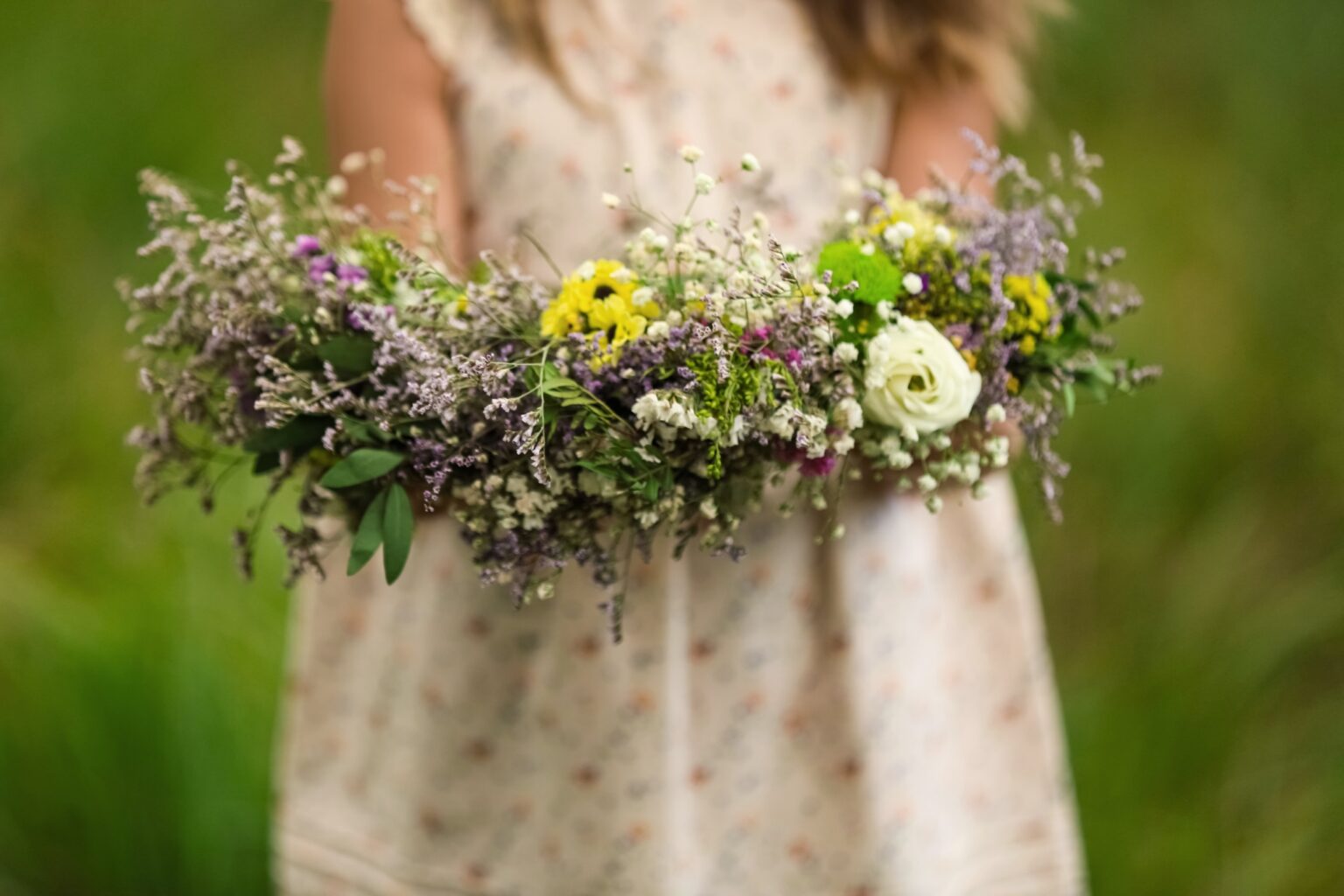
The blomsterkrans — a hand-woven crown of wildflowers and greenery — is one of the most recognizable symbols of Midsommar, and foreigners are warmly encouraged to wear one. Regardless of gender. Regardless of age. The morning of Midsommarafton is often spent foraging for wildflowers in fields and along roadsides, and weaving the crowns together is a communal activity that functions as an excellent icebreaker. If you show up with a flower crown already on your head, or make one during the morning, you will be greeted with visible delight by your Swedish hosts.
Traditional Midsommar folklore holds that picking seven different wildflowers in complete silence on Midsommar night and placing them under your pillow means you will dream of your future spouse. Whether you choose to attempt this is entirely up to you — but knowing about it gives you an instant conversation topic.
The social dynamics: what changes and what stays the same
A standard Swedish social situation requires patience. Conversations are measured, personal space is respected, and it can take months or years to develop genuine closeness. Midsommar compresses that timeline significantly.
As the afternoon progresses — after the herring lunch, through the maypole dances, into the evening — the atmosphere shifts. Conversations become louder and more personal. Physical proximity increases. Professional hierarchies dissolve. People who were formally polite at 1pm are genuinely warm and open by 6pm. This is the window for real connection, and it is worth being present for it.
Alcohol plays a real role in this shift, but the pacing is important. Midsommar celebrations run from early afternoon until well past midnight — sometimes until dawn in the north. This is a ten to fifteen hour event, not a three-hour dinner party. Pace yourself accordingly. Becoming visibly drunk in the early afternoon, before the dances and games, is considered poor form. The expected trajectory is a slow, gradual, sociable loosening over the course of a long day, not a sprint to the finish.
If you do not drink, you can participate fully and without awkwardness. The key is that you still join the table, raise your glass, make the eye contact, and sing the songs. You simply hold a glass of elderflower cordial, sparkling water, or non-alcoholic snaps. What Swedes respond to is your willingness to be part of the ritual, not the specific liquid in your glass. More on the exact mechanics of this below.
When to leave is not strictly defined, but leaving immediately after the herring lunch is considered rude — it implies you came for the food and not the company. Guests are generally expected to stay through the maypole dances, the afternoon games (Kubb is common, as is various outdoor throwing games), and the evening barbecue. Departing sometime between 11pm and 2am is normal. Making sure to say a proper, unhurried goodbye to your hosts — not a quick wave from the door — is important.
The ring dances: how to participate when you have no idea what you are doing
The raising of the midsommarstång — the decorated maypole — signals the beginning of the communal ring dances. The expectation is that everyone joins. Children, parents, grandparents, guests, foreigners, people who have never heard the songs — everyone. Standing on the sidelines and watching is mildly antisocial. Swedes will actively pull you into the circle, smiling, and resistance will make things more awkward than participation.
Joining a dance circle that is already moving is simple: find a gap between two people, make eye contact, smile, and they will open the circle to let you link in.
Små grodorna: your survival guide
The absolute centrepiece of the dancing is Små grodorna — The Little Frogs. The melody is historically a French military march adapted and repurposed by the Swedes with characteristic good humor. The song is about frogs who are funny to look at because they have no ears and no tails. The movements require all participants — adults included — to hop around the maypole in a deep squat, flapping their hands on their heads to mimic ears that are not there, and wagging their hands behind their backs to mimic a tail that is equally absent.
This is genuinely undignified and that is entirely the point. The dance exists to dissolve inhibitions and create shared vulnerability. Making mistakes — going the wrong way, hopping at the wrong moment, confusing the ear-flap gesture — generates warm laughter and immediate connection. You do not need to know the words. Miming the movements while everyone else sings around you is completely acceptable and often endearing. The goal is participation, not performance.
Other dances include Karusellen (The Carousel, which starts slow and accelerates), Raketen (The Rocket, involving synchronized clapping), and several others. Children often lead and demonstrate the movements. Follow the children. They know what they are doing.
The snaps ritual: a step-by-step guide to the most important moment at the table
The snaps or brännvin ritual — the structured toasting with aquavit — is one of the most distinctive elements of the Midsommar meal, and one of the easiest for foreigners to get slightly wrong in ways that create minor but noticeable awkwardness.
The exact sequence of a proper skål is:
- Step one: Everyone’s glass is filled. Do not touch your glass, and do not pour your own drink and start drinking independently. Consuming snaps outside of a communal toast is considered a social failure — it reads as drinking for the sake of drinking rather than for the communal ritual.
- Step two: The host or a nominated person proposes a toast — often by saying “Skål!” or by beginning to sing a snapsvisa.
- Step three: Every person raises their glass to roughly chest height and makes deliberate eye contact with the people around them. This eye contact is the critical part. Moving your gaze around the table, briefly holding it with each person, is a gesture of acknowledgment and respect.
- Step four: The snapsvisa is sung in full. The most common is Helan går — a short, enthusiastic, and very Swedish song about drinking the whole glass. You do not need to know the words. Clapping along, smiling, and attempting to join in phonetically is entirely sufficient and well-received.
- Step five: Everyone drinks — either the whole glass, or a sip if pacing themselves. Both are acceptable.
- Step six: Before putting your glass down, make the eye contact again. A brief nod, a smile. Then lower your glass.
That final eye contact before lowering the glass is the detail most foreigners miss, and it is the part that matters to Swedes.
If you do not drink alcohol, ask your host or find in advance a bottle of non-alcoholic snaps. O.P. Anderson Alkoholfri and Skåne Alkoholfri are both available through Systembolaget and replicate the botanical profile of their alcoholic equivalents very closely. Raising a glass of sparkling water works too — the point is joining the ritual, not the content of the glass. A simple “Jag dricker alkoholfritt idag” (I’m drinking alcohol-free today) is all the explanation needed, and no further pressure will be applied.
Conversation: what to ask, what to avoid, and how to use the day to improve your Swedish
Midsommar is one of the best contexts imaginable for genuine conversation with Swedes, partly because the structured rituals give you ready-made conversation starters that require no creativity.
Topics that always work well: asking about the origin of a specific dish on the table, asking what a particular snapsvisa means, asking which region someone’s family comes from and whether Midsommar is celebrated differently there, asking about summer plans (most Swedes take four to five consecutive weeks off in July), asking someone to explain the seven-flowers tradition.
Topics to avoid: extended complaining about Swedish systems (taxes, bureaucracy, weather), aggressive political opinions, boasting about salary or professional achievements, and religious topics. The tone of Midsommar is warm, curious, and present-focused.
You do not need Swedish to participate fully. Nearly every Swede you will meet speaks excellent English and will switch languages without hesitation. However, attempting Swedish — even imperfectly — is received with warmth rather than amusement. Using “Skål” correctly, saying “Tack för maten” (thank you for the food) at the right moment, and attempting to phonetically join the snapsvisa are all signals of respect and cultural engagement that Swedes genuinely appreciate. If you are actively learning Swedish, Midsommar is an excellent immersion day.
Common mistakes: what to avoid
Some behaviors are considered particularly awkward or rude at Midsommar, and it is useful to know them in advance.
Arriving too early is just as problematic as arriving late. The host’s preparations will still be in progress. Arriving exactly on time, or five minutes late, is ideal.
Staying on your phone during the communal meal is considered genuinely rude. Midsommar is an analog event. The expectation is presence.
Refusing to join the dances is mildly antisocial. If mobility or health is a genuine issue, that context makes total sense. If you are simply shy or feel silly, push through it — everyone feels silly, and that is the point.
Not helping with cleanup at a knytkalas violates the basic equity of the format. When plates start being cleared, offer to help.
Complaining about the weather — even when it is genuinely cold and raining — is a small social transgression. The cultural expectation is cheerful resilience.
Leaving without proper goodbyes is noticed. Swedish goodbyes are warm and unhurried. Find your host, thank them specifically, and take your leave properly.
Where to find a public Midsommar celebration
If you do not have a private invitation, Sweden’s public celebrations are genuinely wonderful and extremely welcoming to international visitors.
Skansen, Stockholm
Skansen, the world’s oldest open-air museum on Djurgården island, hosts one of Sweden’s most iconic urban Midsommar events. The full program includes folk dancers in regional costumes, live fiddle music, the communal maypole raising, and public ring dances that anyone can join.
Adult admission in peak season is approximately 220-285 SEK; children aged 0-15 enter free. The museum typically opens at 10:00 on Midsommarafton with extended evening hours. Full program details and tickets are at skansen.se.
Leksand and Rättvik, Dalarna
Dalarna is considered the cultural heartland of Swedish Midsommar, and the celebration in Gropen in Leksand is one of the largest in the world — attracting up to 30,000 people. The 25-metre, 450 kg maypole is raised manually, there are traditional church boat races on Lake Siljan, and participants arrive in regional folk costumes specific to individual parishes.
Admission is free. Book accommodation months in advance — the region fills up entirely. Full details at visitdalarna.se.
Slottsskogen, Gothenburg
Slottsskogen park in central Gothenburg hosts a family-friendly, highly international celebration on the large Björngårdsängen lawn. Live music, communal singing, and ring dances typically run from approximately 15:00 to 18:00 on Midsommarafton.
Admission is free. Arrive early with a picnic blanket. Details at goteborg.com.
Finding local events near you
For events outside these major locations, check your municipality’s website, search Facebook groups for your city (searching “Midsommar [city name] 2026” typically surfaces local events), and check visitsweden.com/midsommar for a regional guide updated annually.
After Midsommar: the follow-up that matters
Your social obligations do not end when you leave the celebration. In Swedish culture, the follow-up is not optional — it is expected.
Within 24 to 48 hours, send a message to your host using the phrase “Tack för senast“ — “thanks for last time.” If you are writing on the day after, “Tack för igår“ (thanks for yesterday) is equally appropriate. This message is not a formality — it is a genuine social expectation, and failing to send it significantly reduces the likelihood of being invited again.
Keep the message warm and specific. Mentioning something particular from the day — a conversation you had, a dance that made you laugh, the strawberries — shows that you were genuinely present and engaged, not just going through the motions.
Exchanging contacts during the celebration itself is typically done casually: Instagram, phone numbers, or Swish (the Swedish mobile payment app, commonly used to settle shared knytkalas costs). Business cards are not a Swedish social norm.
If you were hosted at a private residence or summer cottage, the unwritten laws of Swedish reciprocity apply. At some point during the summer or early autumn, invite your hosts back — for dinner, for a fika, for something of your own. This reciprocal gesture is how a single Midsommar invitation becomes the beginning of a real friendship.
Midsommar is worth the effort
Midsommar asks something of you. It asks you to be present without your phone. It asks you to hop around a pole while singing about frogs. It asks you to maintain eye contact before putting down your glass. It asks you to bring something, stay late, help clear up, and send a thank-you message the next day.
In return, it gives you access to Swedish social life in a way that almost nothing else can. The relationships built at Midsommar — the conversations started over herring, the connections made in a dance circle, the warmth that comes from sharing something genuinely important to your hosts — have a quality and durability that is hard to replicate through any other route.
June 19 is four weeks away. Whatever your plans, find a celebration to be part of.
Cook it the Swedish way
this summer
31 authentic recipes for the perfect Midsommar table — gravlax, silltårta, new potatoes, snaps & strawberry cake.
If you are looking for company or want to share where you are celebrating, leave a comment below — there are plenty of readers of this blog in every part of Sweden. And if this kind of guide to actually living in Sweden is useful to you, the LikeSweden newsletter will keep you informed through the summer and beyond.