



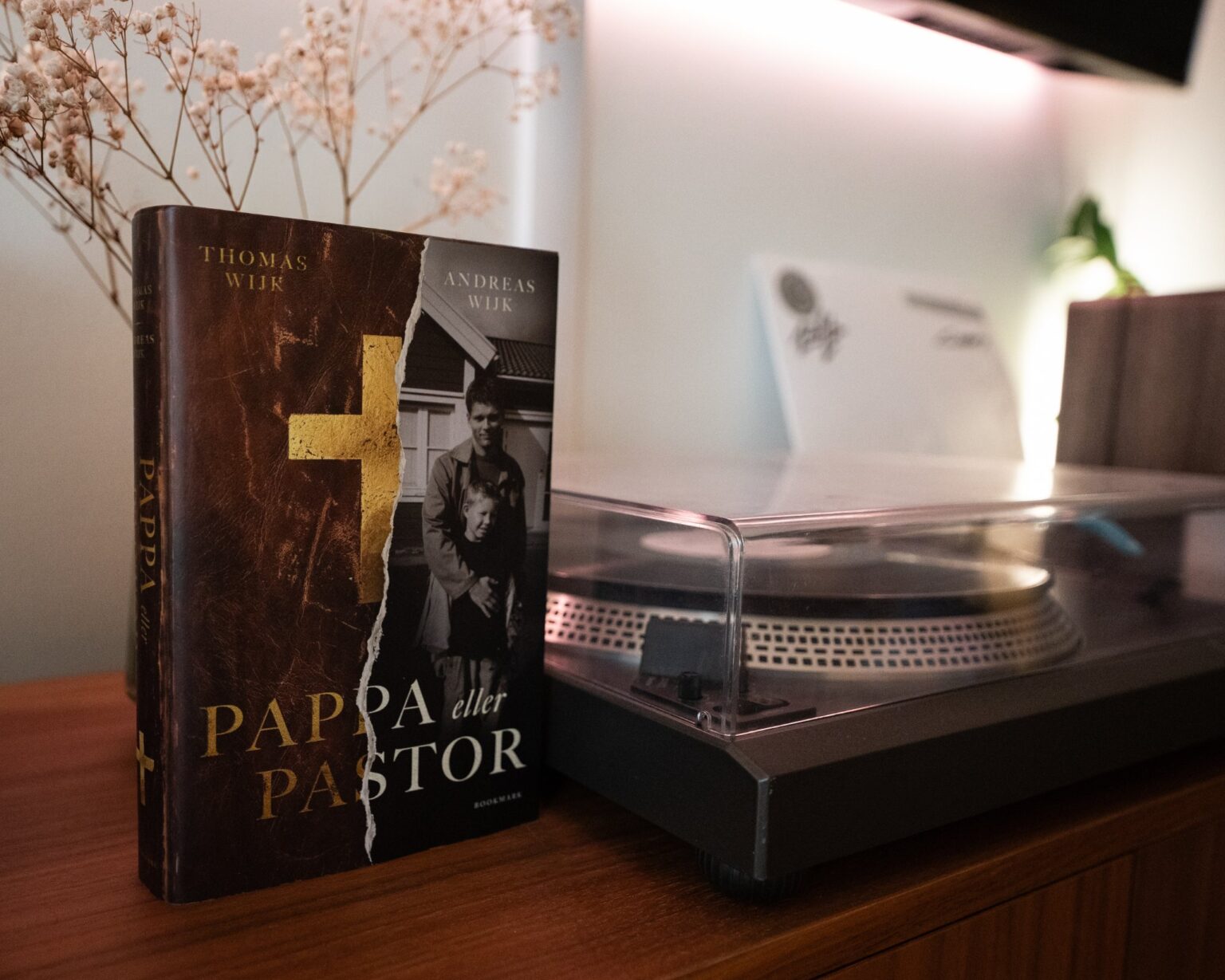

I bought my copy two weeks before the official release date. I couldn’t wait. I’d seen the book announced, I’d already pre-ordered it, and then at Bokmässan in Gothenburg the opportunity appeared — the authors were there, signing copies — and I thought: this is not a book I want to wait for. I bought it, I got it signed by both Thomas and Andreas, and I started reading it that same weekend.
By the time I finished, I had cried in at least two public places.
How I found this book and why it matters to me personally
I should explain how I know Andreas Wijk, because it changes how I read this book and why I’m writing about it here.
In December 2025, I saw Moulin Rouge at Rondo in Gothenburg for the first time. I was overwhelmed by the performance, specifically by Andreas in the role of Christian, and I wrote something on my Instagram stories about it. I said he was the most authentic Christian I had ever seen in that role. He replied. I went back to see the show several more times and that is how I had a chance to speak to him personally.
Reading “Pappa eller pastor,” I finally understood completely why.
In the book, Andreas describes receiving tickets to Moulin Rouge on Broadway as a birthday gift. He falls in love with the musical, and shortly after, auditions open for the Stockholm production. He feels, he knows, that Christian’s story is his story. He writes about performing the role every night:
“Christian’s story is mine. (…) Every night he enters believing love will conquer everything. Every night he loses her. Every night he has to get back up.”
“Pappa eller Pastor”, my translation
That’s why he was so extraordinary in that role. Not just because of his voice, which is remarkable, but because he wasn’t acting. He was living it. When I wrote that he was the most authentic Christian I had ever seen, I was right, I just didn’t yet know how deeply true that was.
What the book is about
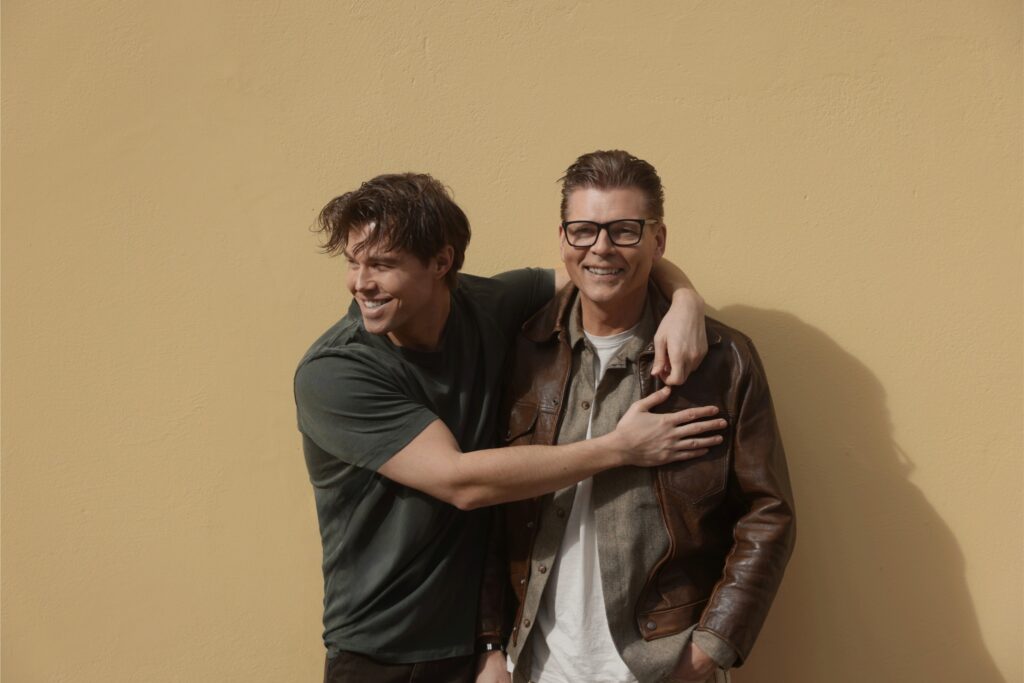
Thomas Wijk grows up in a strict Pentecostal family where television, cinema, and school dances are considered contrary to the faith. He becomes a pastor. He marries Ulrika. They have two children, one of whom is Andreas, who, shortly after birth, has to undergo heart surgery. Years later, the surgery happens again.
When Andreas is a teenager, he tells his parents he is gay.
For Thomas, who has built his entire life, identity, and professional existence around a conservative religious worldview, this is the moment everything cracks. “Pappa eller pastor” is the story of what happens next, told alternately by father and son, chapter by chapter, in two completely different voices.
Two voices, one story
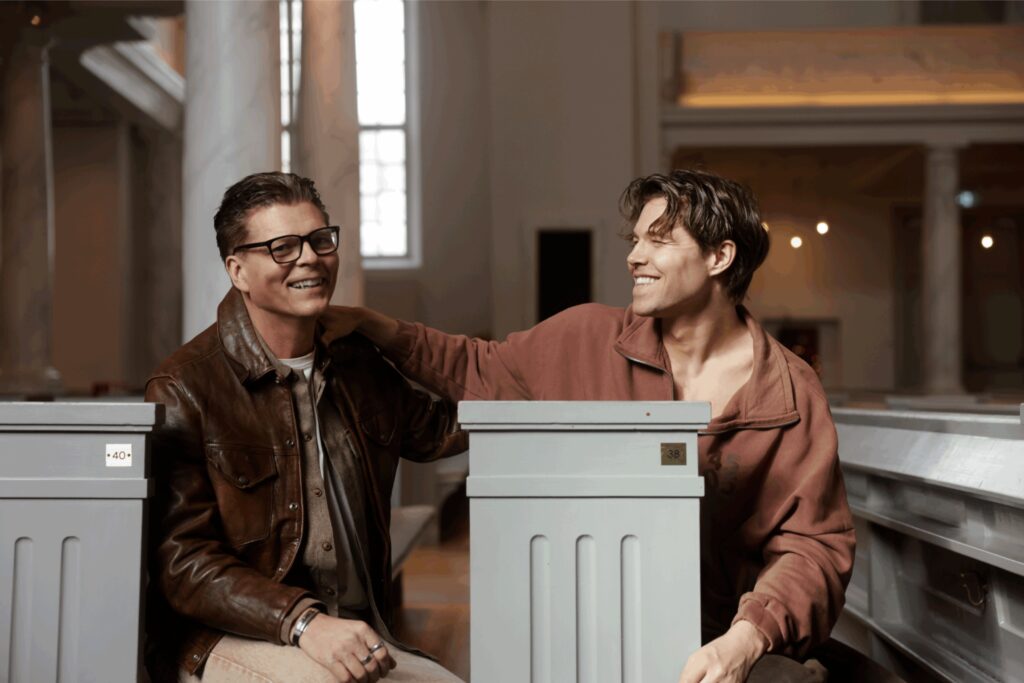
The structure of the book is one of its greatest strengths. Thomas and Andreas don’t just tell the same story from different angles, they write in genuinely different registers, and that contrast is part of what makes the book so powerful.
Thomas’s chapters are ordered, measured, analytical. He is a man who has spent decades constructing and communicating a coherent worldview, and that shows in how he writes. His sentences are considered. His self-examination is methodical. He traces back his beliefs, his upbringing, his father who was also a pastor yet, surprisingly, movingly, was among the first to simply accept Andreas without question. Reading Thomas, I often thought: of course he could lead a congregation. He thinks clearly, he communicates clearly, and you follow him.
Andreas’s chapters are something else entirely. Chaotic, emotional, full of the specific texture of a child who doesn’t yet have the language for what he is, a teenager drowning in shame, an adult slowly finding his way from confusion into something that can only be described as joy. His writing doesn’t have Thomas’s composure, and that’s exactly right.
There’s a phrase Andreas uses that I wrote down and keep coming back to: “Jag är det som inte får finnas och ändå finns jag.”
I am what is not allowed to exist, and yet I exist.
“Pappa eller Pastor”, my translation
I read that line and had to close the book for a moment.
The moments that stayed with me
There are several scenes in this book that hit like a punch you didn’t see coming. The one that affected me most is the moment Andreas tells his friend Vera. She’s his closest friend, she receives the news, and for a moment you feel relief — here is someone who accepts him. And then she doesn’t. She tells him what awaits him. She leaves.
I found myself genuinely angry at a person I will never meet, for a thing that happened years ago.
Then there’s the viral video, Andreas making his coming out public, with his parents responding to the song “If I Was Gay,” filmed and shared with the world. Reading the backstory of how that moment actually came to be was something I hadn’t expected from a book I thought I already partly knew. It was deeply moving.
And then there’s a dream Thomas has, a dream in which Lennart, a friend who died in the Estonia ferry disaster, appears and says:
Don’t forget your family. Don’t forget what matters most.
“Pappa eller Pastor”, my translation
That sentence, from a friend he lost, becomes a kind of compass. Thomas may have sometimes placed faith and his church community above his family, but that compass kept pulling him back.
On faith, love, and things I believe
I want to be honest about where I’m coming from. Faith has never been my guide in life. I believe in love, I believe it’s the strongest and most beautiful force there is, and that it should be protected and nurtured. The idea that a merciful God could hate a group of people who harm no one, who simply love across the boundaries of gender, that has never made sense to me, not for a single moment, yet that was something the Catholic Church tried to force on me while growing up.
But this book didn’t ask me to agree with Thomas. It asked me to understand him. And I did. Almost every action he takes, however painful to read, comes from a place of wanting what’s best for his son — as he understands it, in that moment, from inside that worldview. That understanding evolves. It changes. And watching it change is one of the most genuinely moving things I’ve read in years.
There’s a moment Thomas writes in his afterword that I keep thinking about:
Be careful who you hate — it might be someone you love.
Pappa eller Pastor”, my translation
I finished reading with a profound sense of calm and an overwhelming desire to cry, both at the same time.
Andreas
I had already formed a sense of who Andreas is before I read this book. Everything I thought I knew was confirmed and multiplied. I cannot imagine the strength it takes not only to survive what he went through, but to come through it as someone so openly warm, so genuinely joyful, so completely without bitterness. His kindness isn’t a performance. It is thoroughly, visibly his.
In the book’s afterword, he writes directly to anyone who might be reading it in a moment of doubt:
You are not alone. God loves you. Read that again.
Pappa eller Pastor”, my translation
After everything he went through – the shame, losing friends, the minority of hateful comments and threats that appeared after his public coming out even in a country that presents itself as open and accepting – and alongside the overwhelming wave of support, of people who wrote to say his courage gave them courage, who thanked him for the strength his story passed on to them – he still writes that.
I want my future children to grow up knowing they are loved the way Andreas ultimately knows he is loved. That’s what I took from this book, more than anything.
And Thomas, his final words in the afterword:
Let us together build a better future. My wish is to build bridges between two worlds.
“Pappa eller Pastor”, my translation
Yes. That.
One small note for Swedish learners
This book is written in accessible, natural spoken Swedish, Thomas’s register is a little more formal, Andreas’s is closer to everyday speech. If you’re learning Swedish and want to read something that flows naturally while also giving you a lot to absorb, this is a genuinely good choice. I found myself noting down phrases and words I hadn’t encountered before, which felt like a bonus inside what was primarily just a very human story.
Who should read this
Everyone. But specifically: anyone who has ever had to choose between who they are and what the people they love believe. Anyone who has been a parent who got something wrong and had to find their way back. Anyone who needs to be reminded that love, even when it fails, even when it hurts, even when it takes years to get it right — is still what matters most.
This is one of the most honest books I’ve read in a long time. I am glad it exists and I’m waiting impatiently for an English edition so more of you can read it.